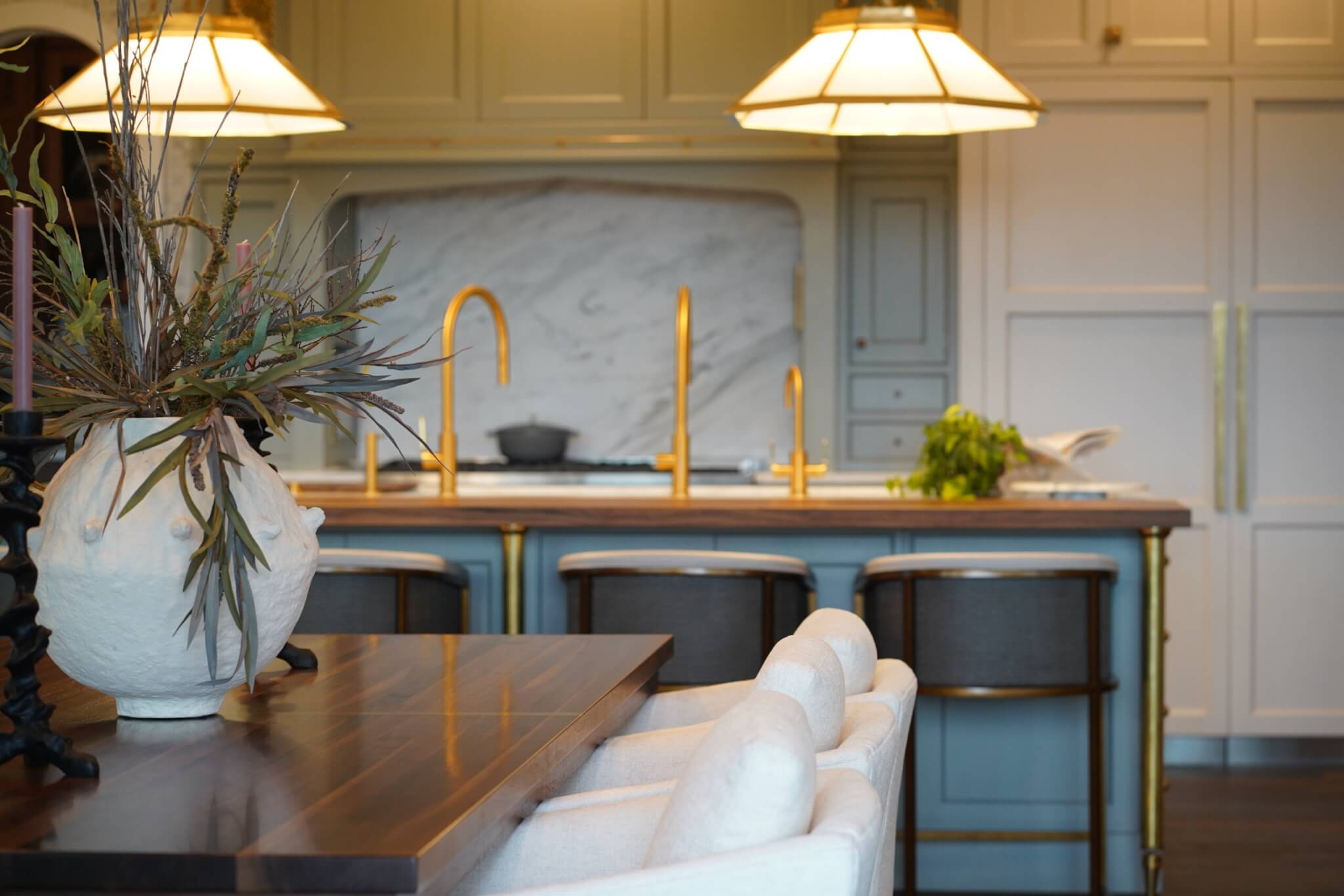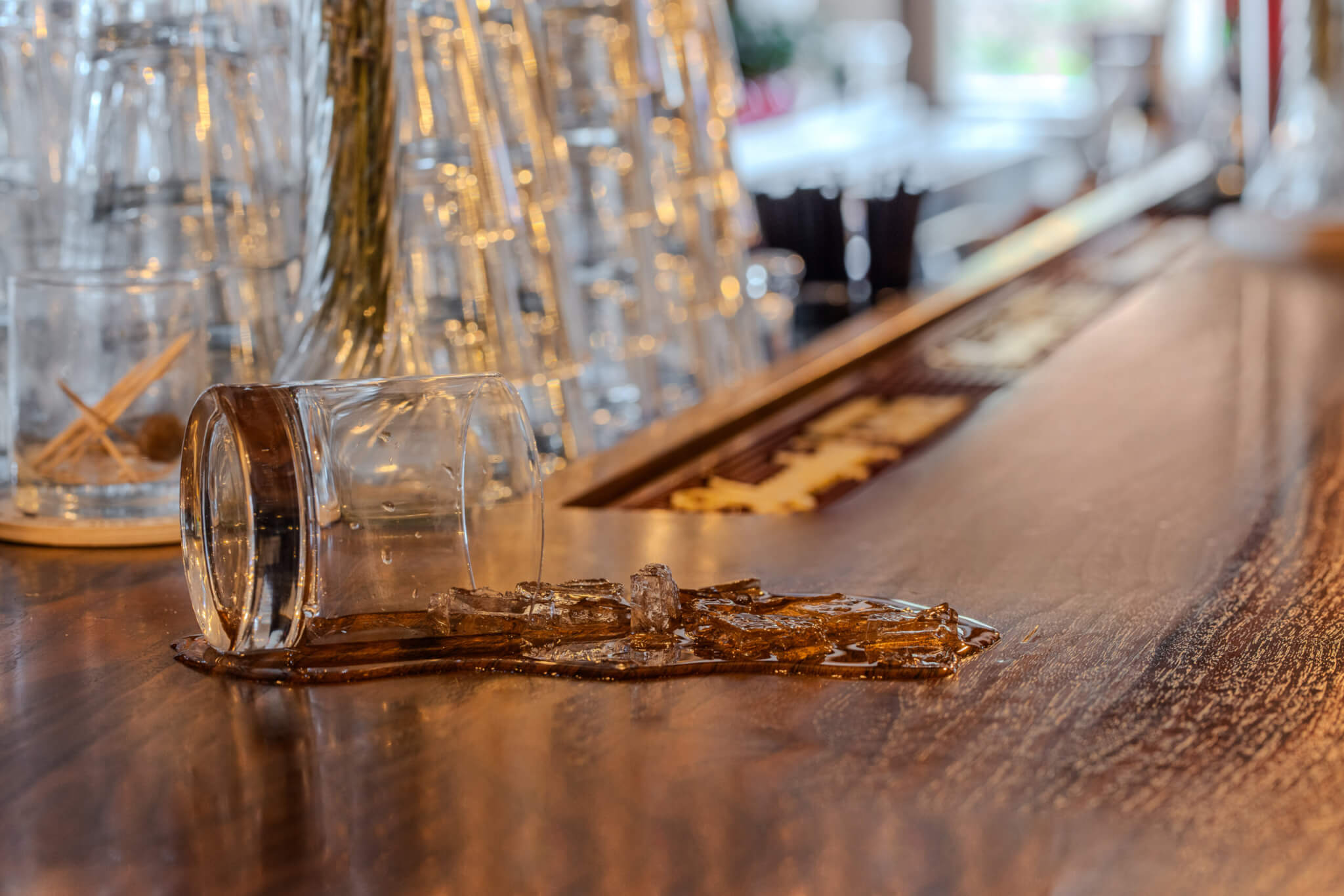
Designing spaces that feel as good as they look
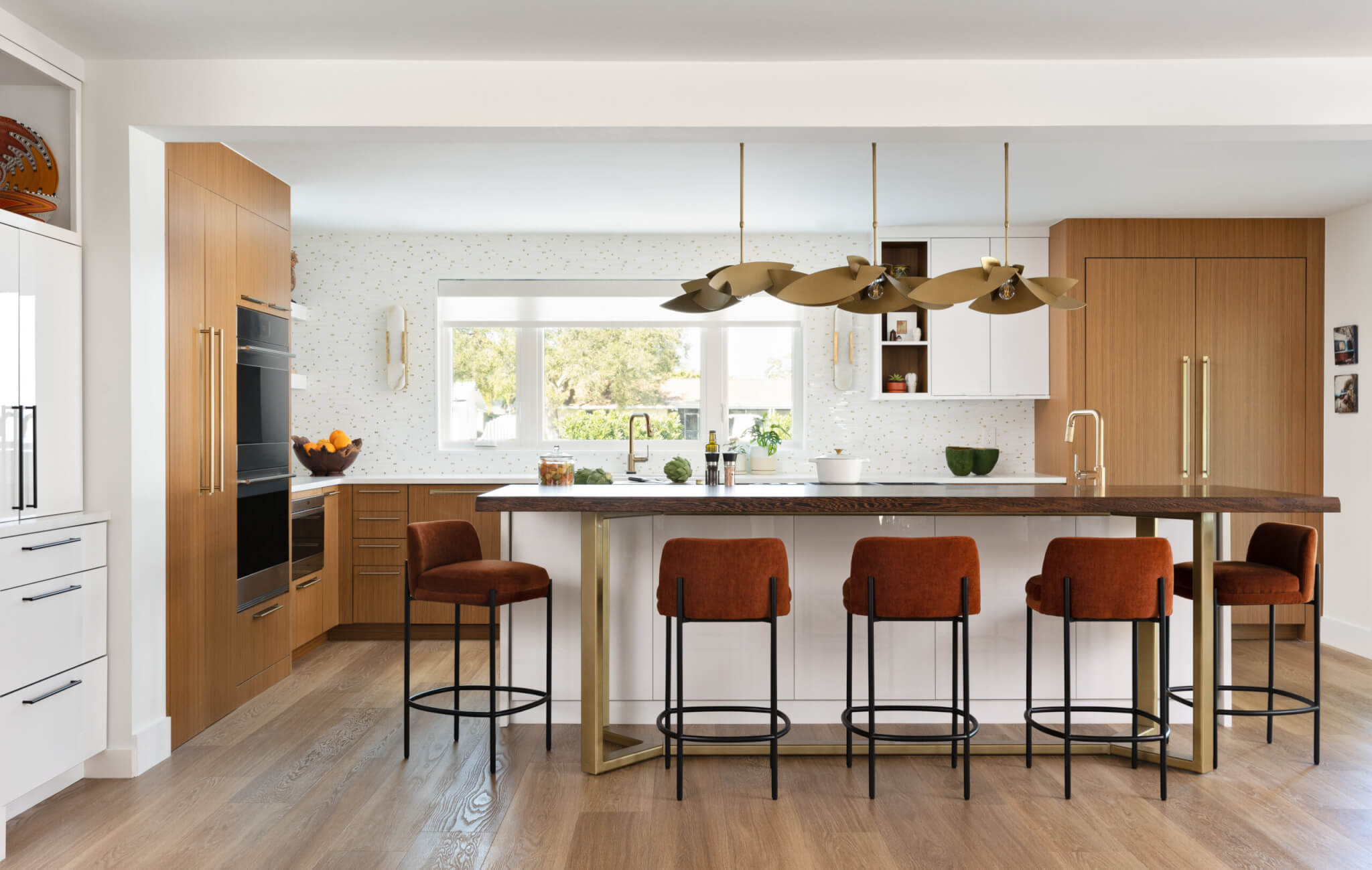
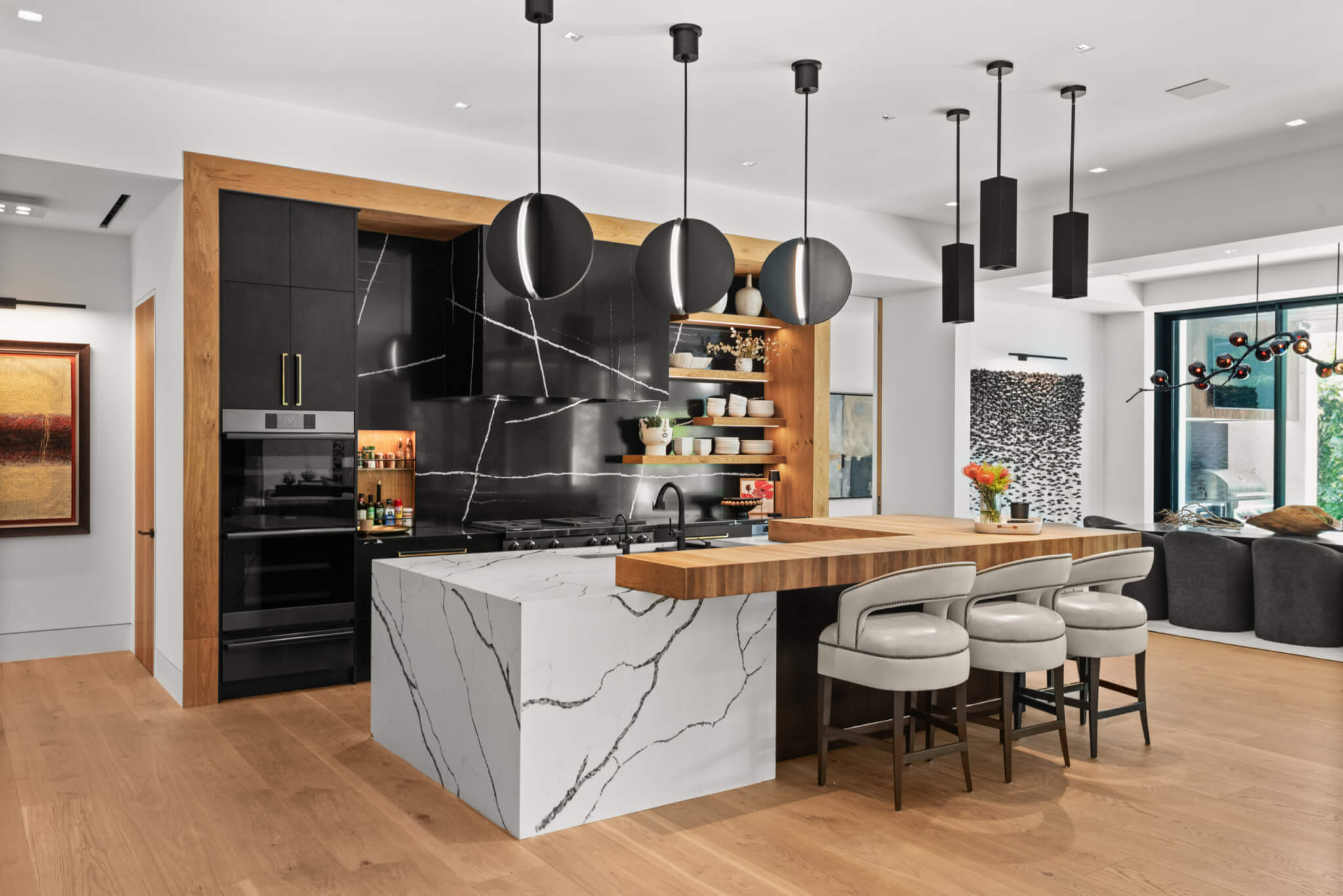
In this contemporary kitchen by Grothouse design partner, Krista Agapito of S&W Kitchens, the island isn’t just a feature, it defines how people gather.
A five-inch thick edge grain White Oak top, spanning over ten feet, anchors the entire space. Precise in execution and built to perform, it reflects the same philosophy Krista brings to every project: balanced, thoughtful, and grounded in how people actually live.
“This five inch thick wood top gave both the dramatic effect we desired, as well as the height separation between the surface levels, making a comfortable bar stool height counter.”
Designing for Real Life
Krista’s work begins with understanding the client, not just their aesthetic, but their habits.
“My design style leans more to clean lines, organic, and well-balanced,” she explains. “A design with some contrast of dark and light. Open, yet dramatic.”
But what defines her work is how it functions day to day.
“A well-designed space should feel clean, but also warm and inviting. It’s all about lifestyle. Matching any space to its owner.”
That perspective shapes everything, from layout to material selection, resulting in spaces that feel effortless to use.
When One Material Falls Short
The scale of this island created a clear challenge. “Using a single surface island top just didn’t feel like the right choice,” explained Krista.
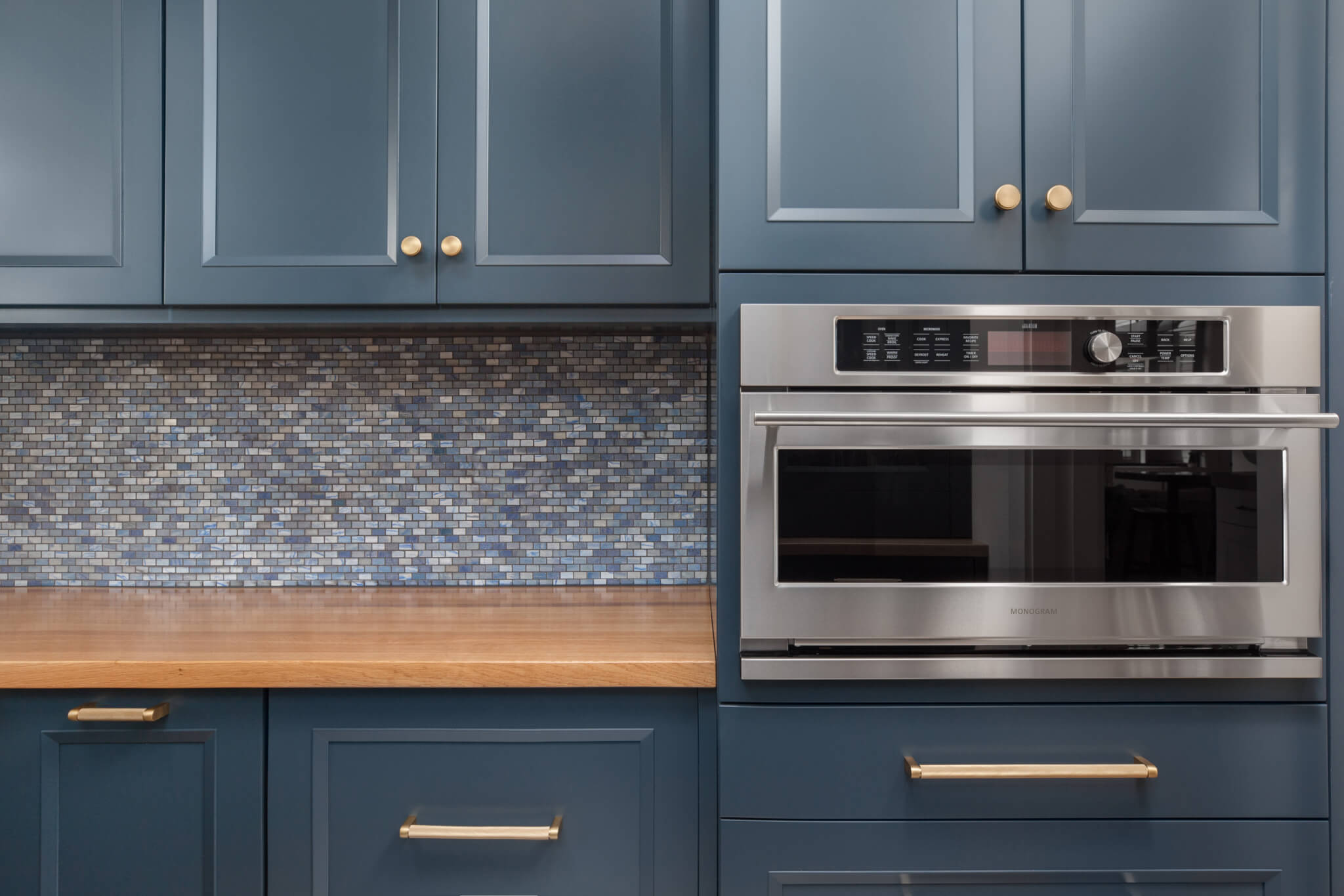
A full stone surface would have required multiple slabs, introducing seams and breaking up the visual continuity. Instead, Krista shifted the approach. “A white oak top that matched with the European white oak flooring was what the space needed to warm up the black cabinetry and quartz countertops.” That decision did more than solve a problem. It connected the space, tying together floor, cabinetry, and island into a cohesive whole.
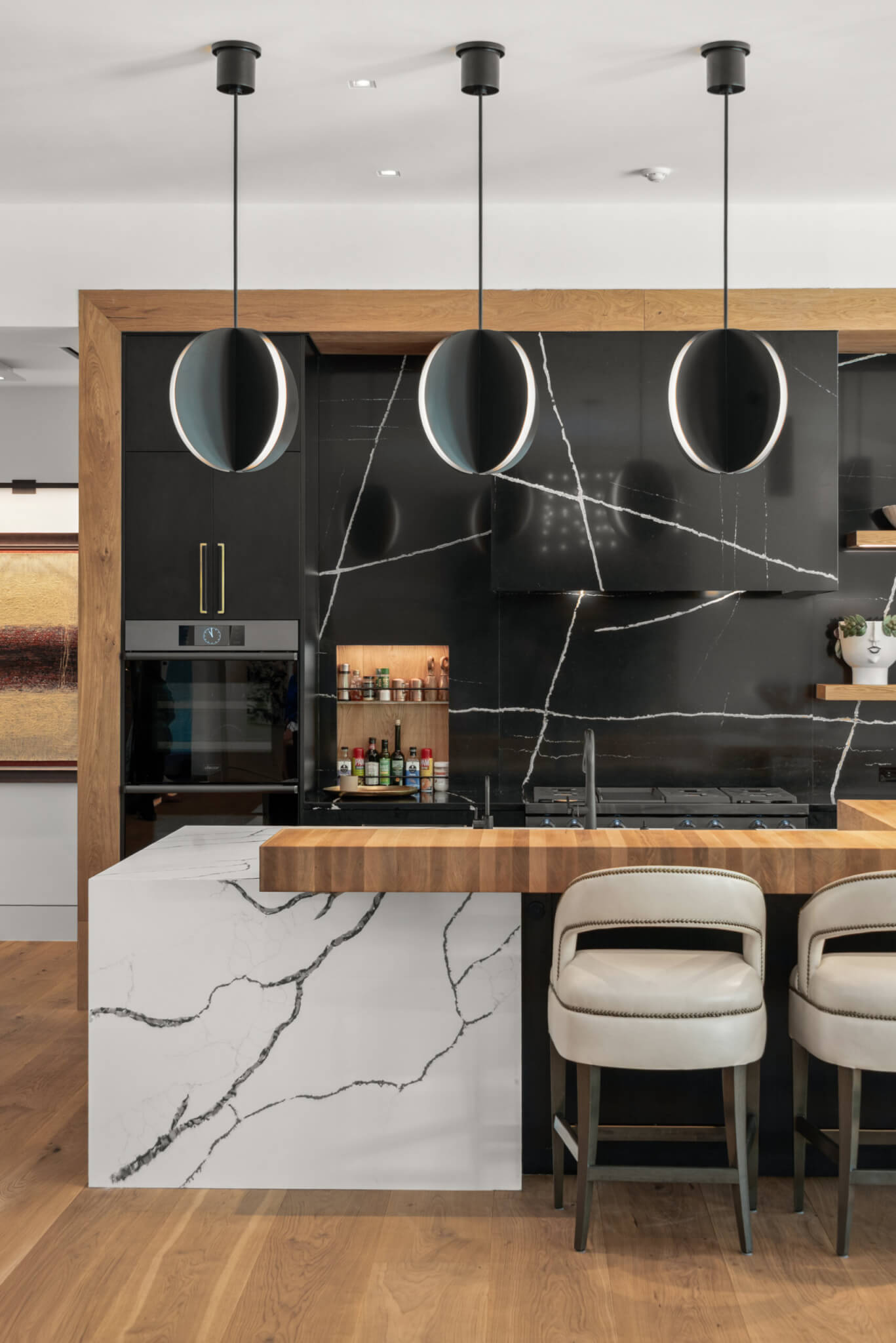
Photo by Rickie Agapito
Designing How People Gather
Rather than defaulting to a straight bar layout, Krista reconsidered how the island would actually be used. “We wanted to create something more conversational- an L-shaped top rather than leaving guests shoulder to shoulder,” explained Krista.
The result changed the experience entirely:
- A multi-level surface that creates separation without dividing the space
- A 5-inch thickness that adds presence and structure
- A layout that encourages interaction, not just seating
The wood became a functional layer of the design, not just a visual one.
The Work Behind the Simplicity
What appears simple on the surface required extensive coordination behind the scenes. Installing a 1,400-pound wood top meant navigating an active jobsite, challenging conditions, and a complex delivery. But the real work was in the planning.
“The real challenge was planning the support to cantilever this heavy showpiece. It took a small army… but the end result was a simple install once the top was in the home.”
That “small army” and level of preparation is what allowed the finished space to feel effortless. Krista worked across multiple teams to get it right:
- Coordinating with the stone fabricator to align materials
- Collaborating with the builder on substrate and internal framing
- Working with installers to precisely place every bracket and support
- Partnering with Grothouse engineering to address structure, movement, and load, not just during install, but over the lifetime of the countertop
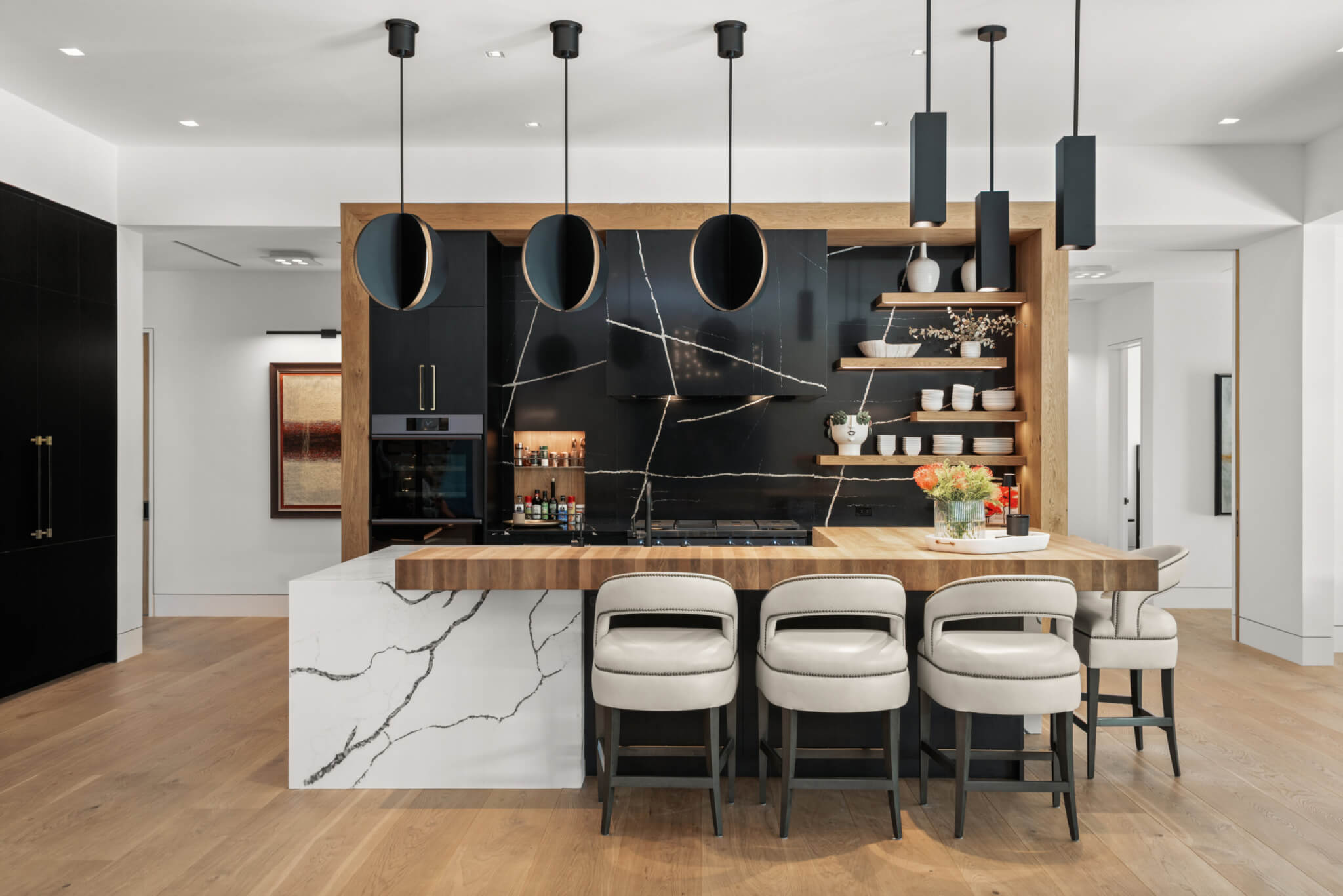
Photo by Rickie Agapito
Why Wood Continues to Matter
For designers and architects considering wood, Krista’s advice is straightforward.
“When it comes to specifying wood tops, go for it,” she says. “The natural beauty elevates any design, and creates visual interest, not to mention a conversation piece. Wood adds warmth, visually and physically. It’s easy to maintain, and naturally antibacterial.”
For Krista Agapito, wood is a tool offering something few materials can match:
- Warmth, both visually and physically
- Character that evolves with the space
- Usability, with a surface that can be maintained and refreshed over time
And in a space designed for gathering, that’s exactly the point.
Looking Ahead
Krista is already exploring what’s next. “I’d love to incorporate some of the Anvil™ Metal finishes… I think that would be a great addition to any design.” As materials continue to evolve, the ability to combine wood with metal and stone opens new opportunities for contrast, durability, and detail.
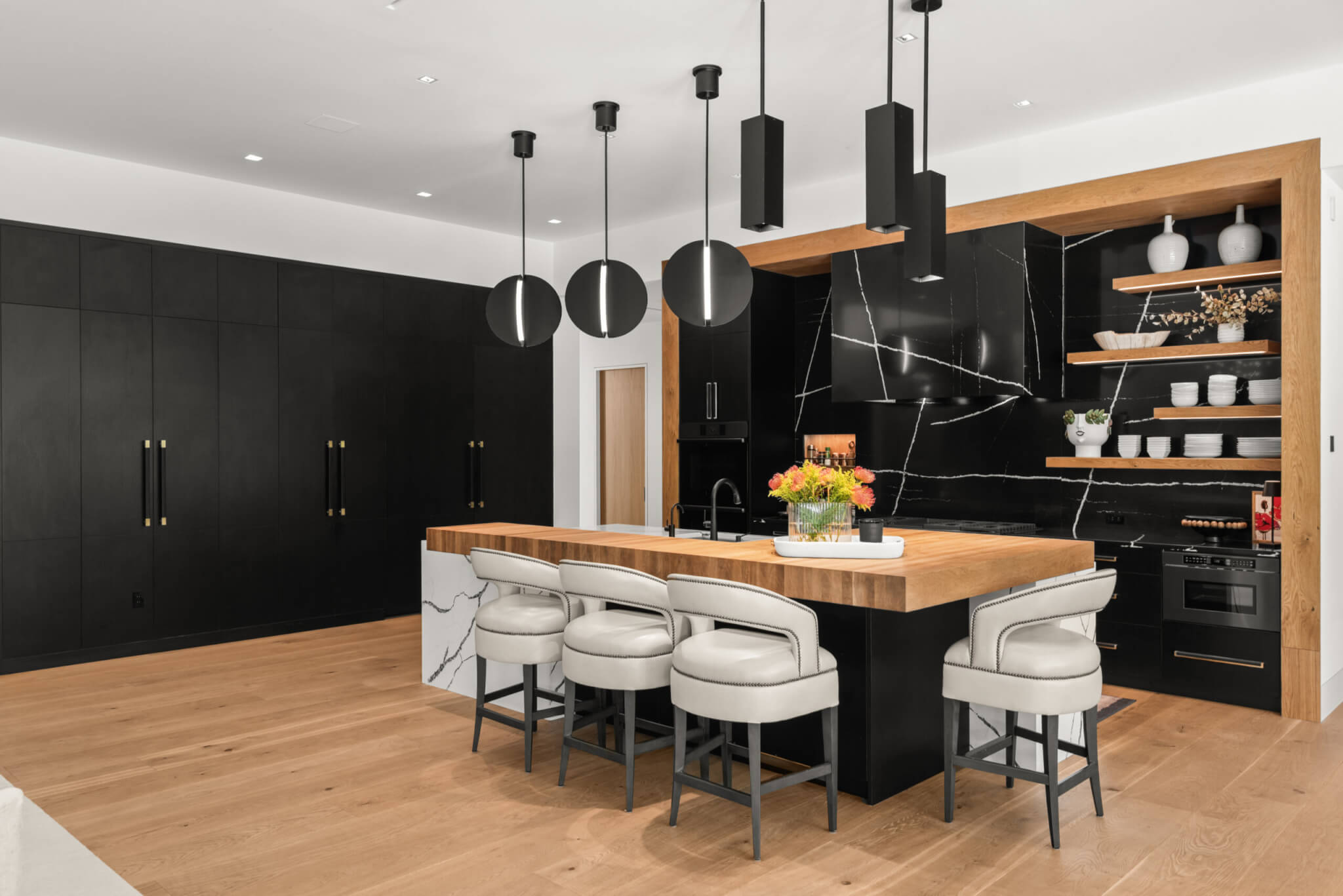
Photo by Rickie Agapito
A Final Perspective
This project is a reminder that wood, when engineered thoughtfully, can carry far more responsibility than a single surface.
For designers willing to think beyond a single surface, wood becomes more than a selection; it becomes structure, warmth, and experience all at once. And at Grothouse, our team of experts is here to make your vision come to life.