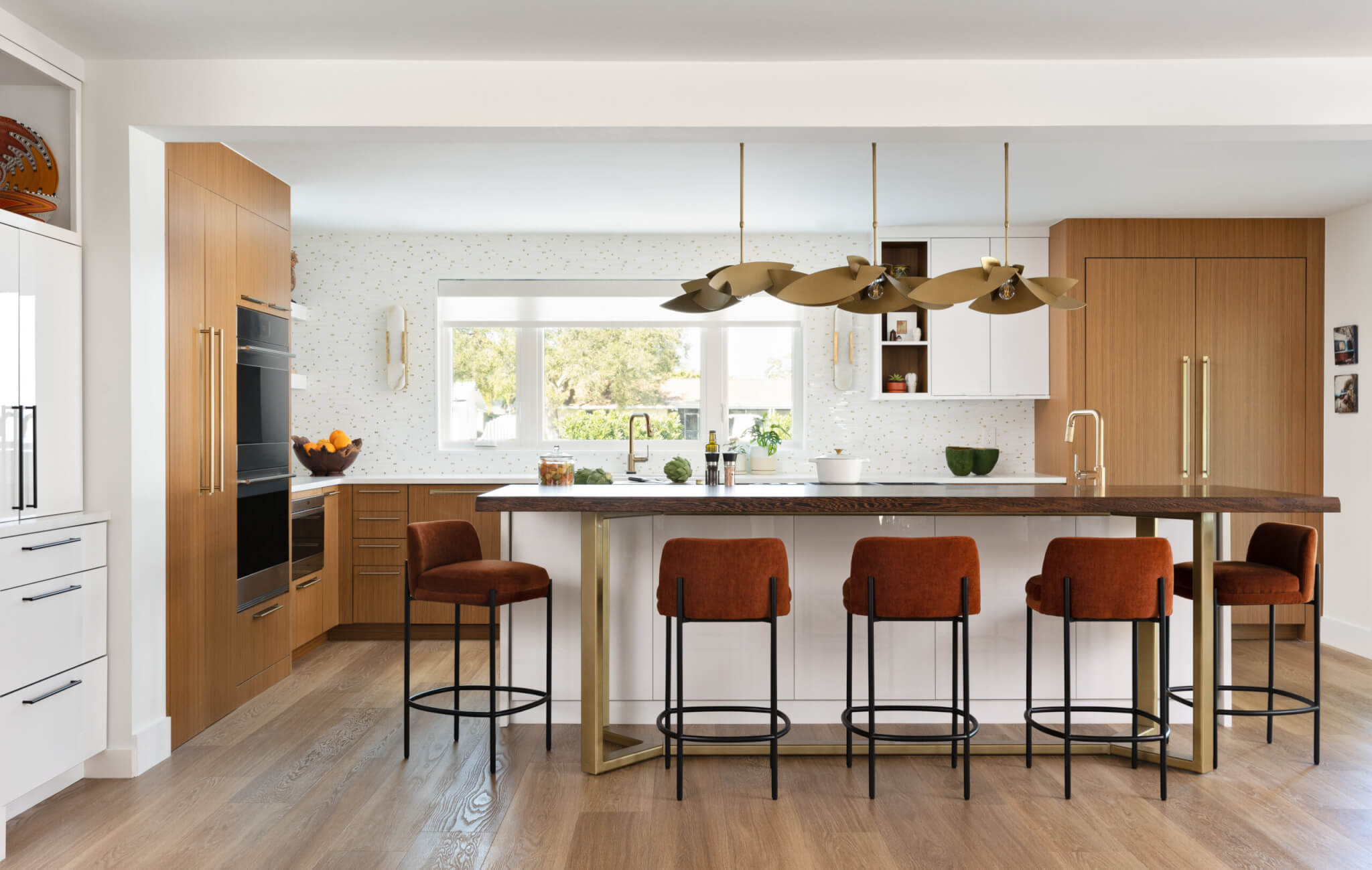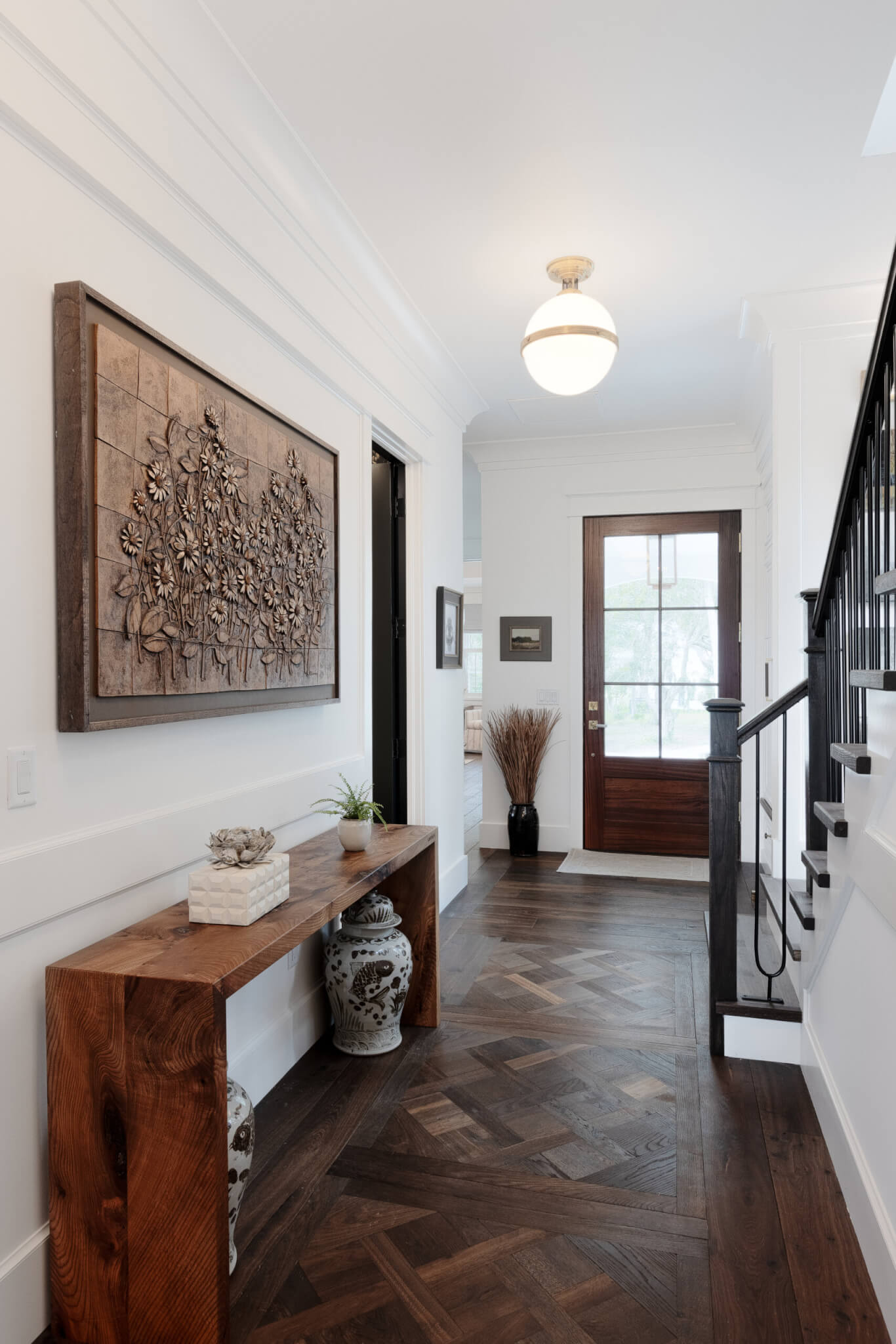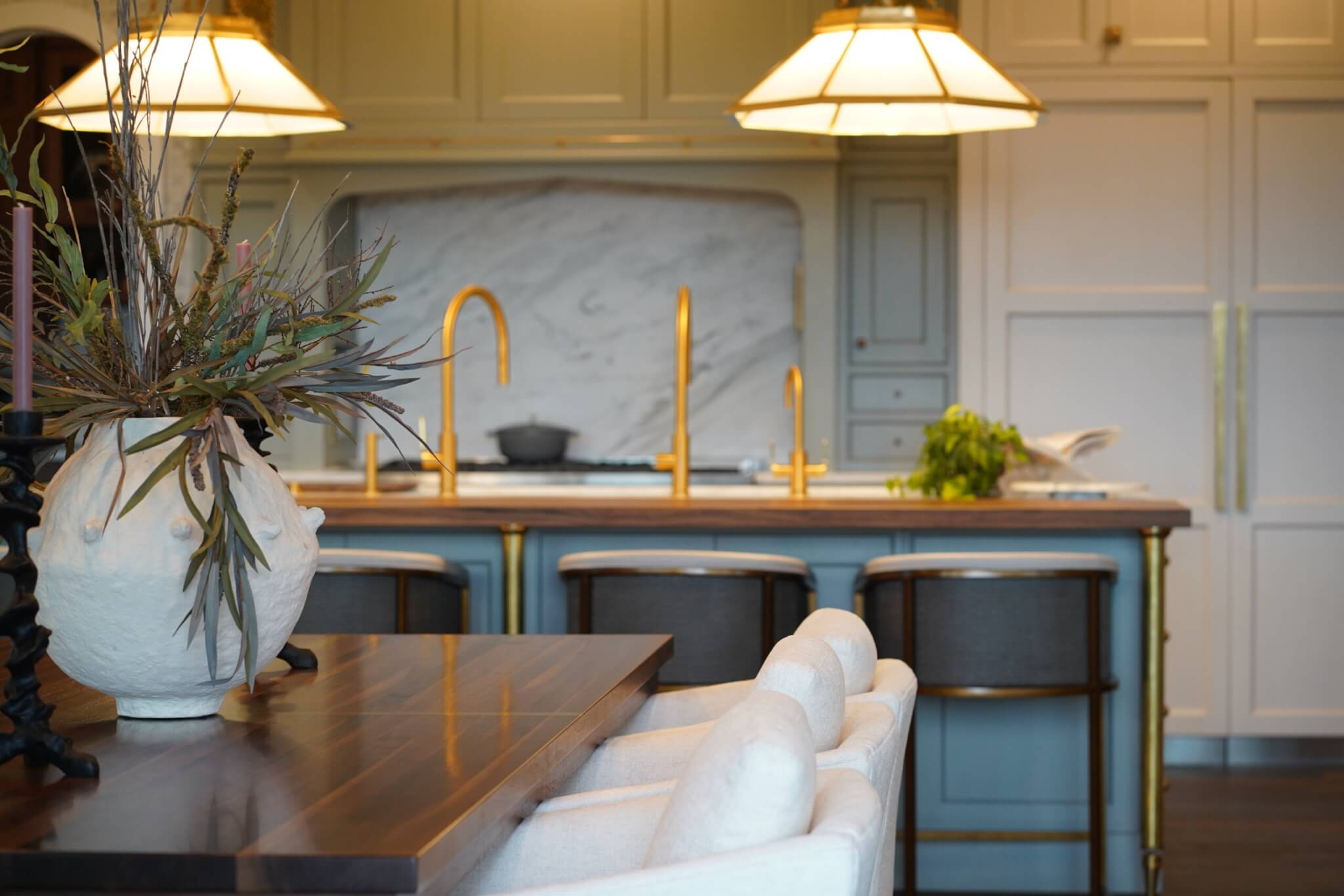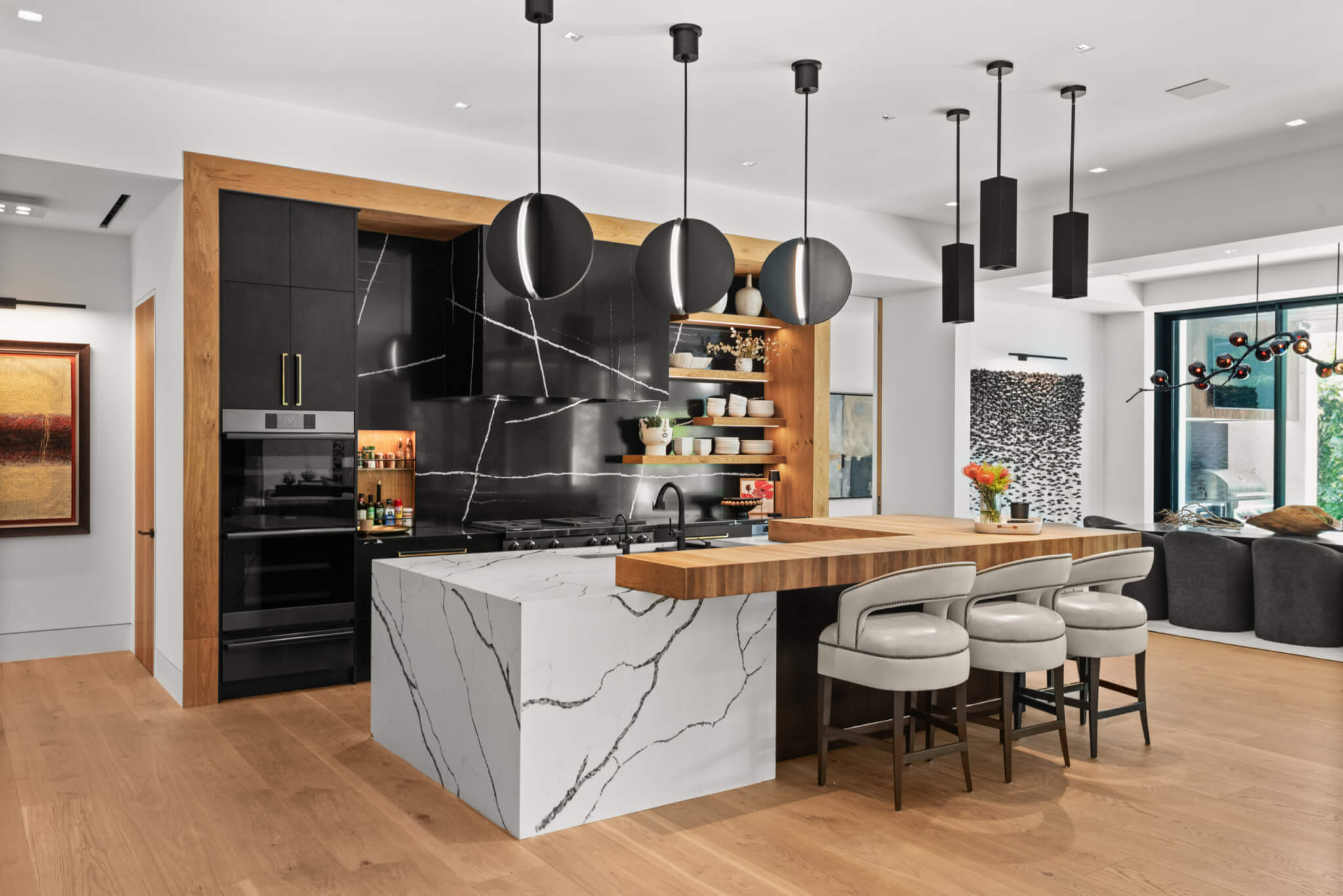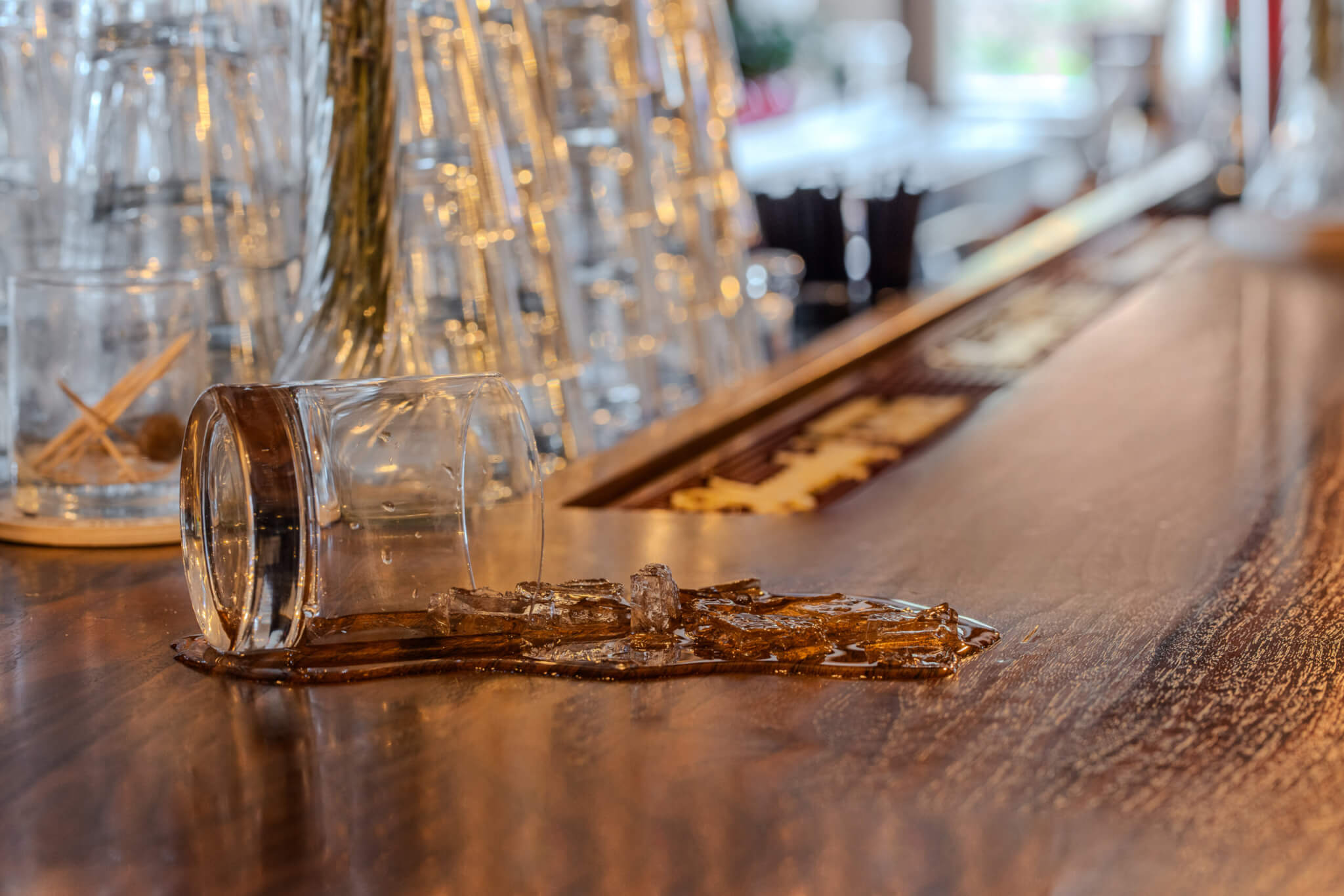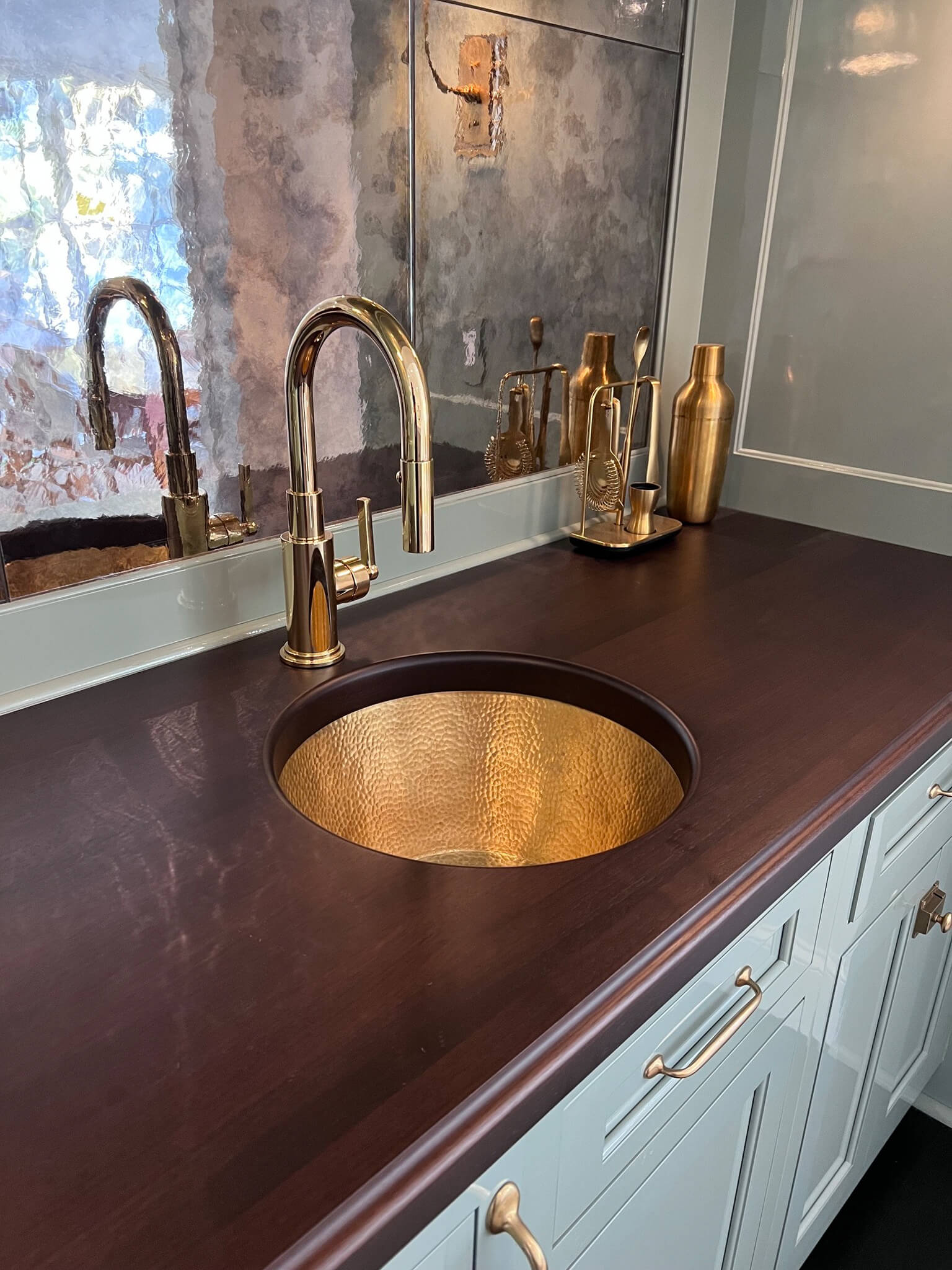
The wood species may be the first decision a designer makes, but it’s rarely the last one that matters.
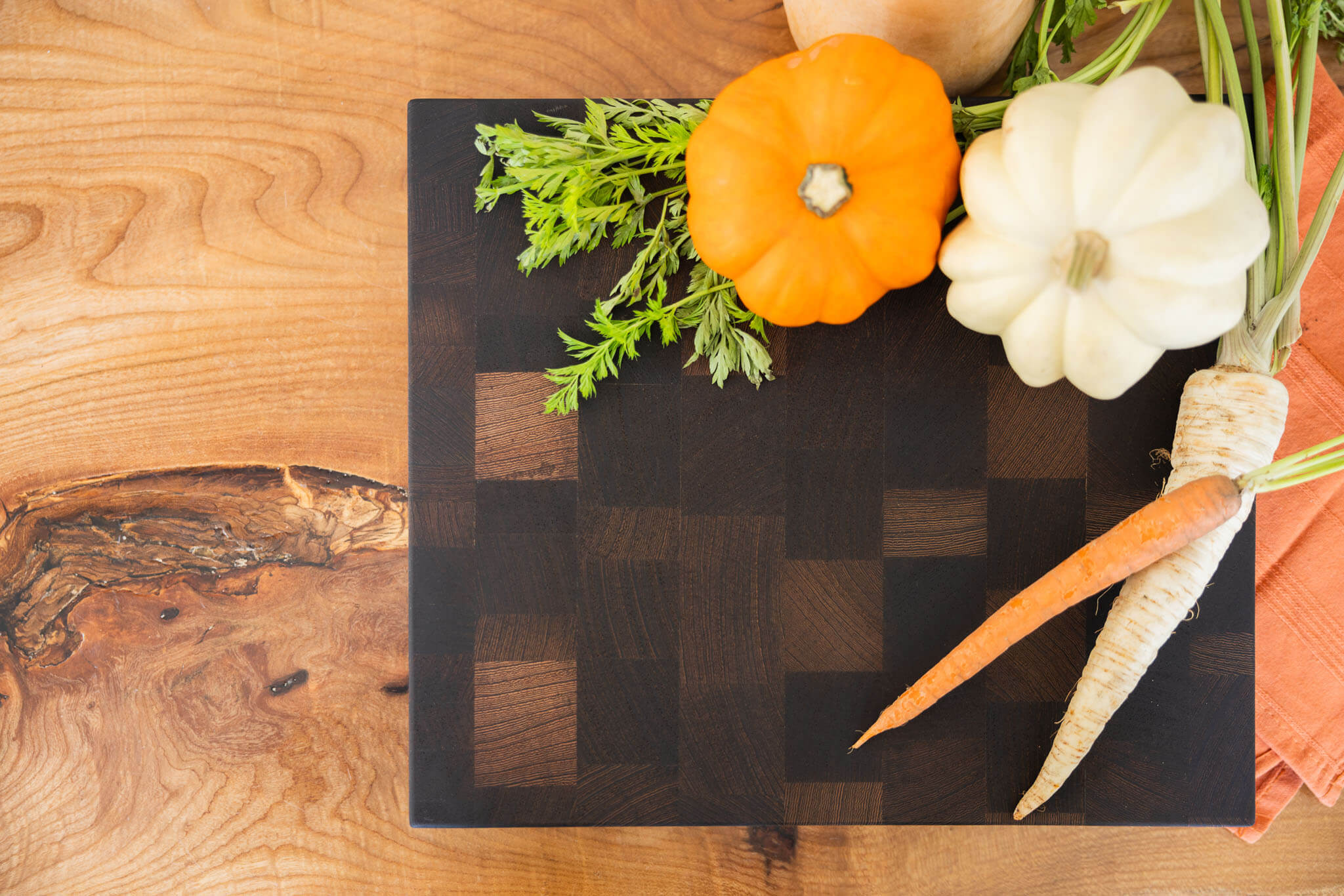
When a designer begins planning a custom wood surface, the conversation often starts with species. Wenge, White Oak, Cherry, Sapele, Walnut…they each bring their own character, color, and grain pattern to a project.
But after nearly 30 years of collaborating with designers, we’ve found that the success of a custom wood surface is rarely determined by species alone.
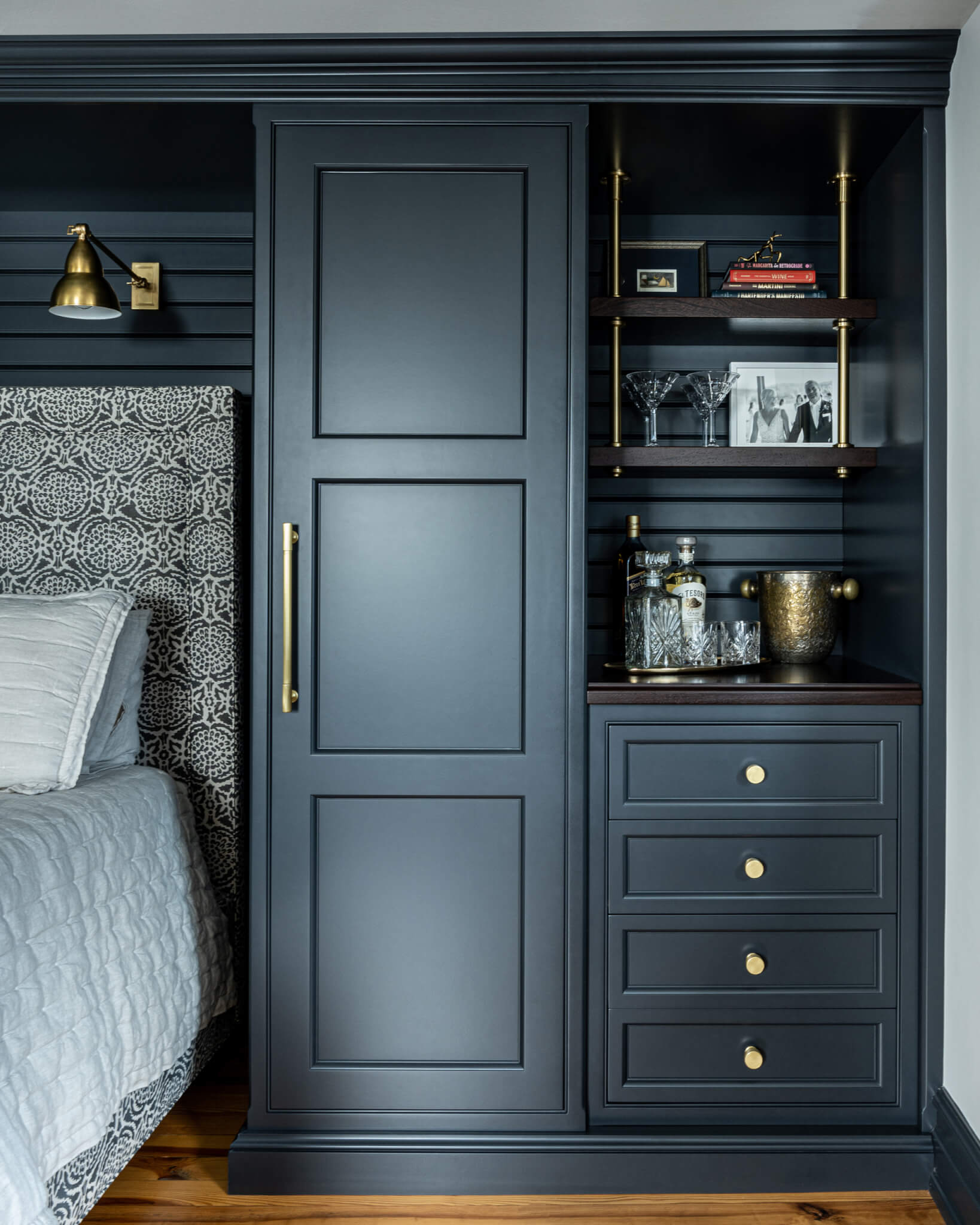
Some of the most important decisions happen after the wood has been selected. Edge profiles, finish systems, intended use, and installation details all influence how a surface looks, performs, and ages over time. While these choices may seem secondary during the design process, they often have the greatest impact once the project is in everyday use.
Every Detail Should Support the Way the Surface Will Be Used
A wood countertop surrounding a prep sink has different performance requirements than a floating shelf. A commercial hospitality project will experience different wear than a residential kitchen island. Even two surfaces made from the same wood species may require completely different specifications depending on how they’ll be used.
That’s why we encourage designers to think beyond appearance alone.
Questions like these often shape the final specification:
- Will the surface come into regular contact with water?
- Is it intended for food preparation or decorative use?
- Will the edge profile influence comfort, durability, or the overall design language?
- Does the project require enhanced moisture protection or a traditional oil finish?
The answers help determine the best combination of construction, finish, and detailing for the application.
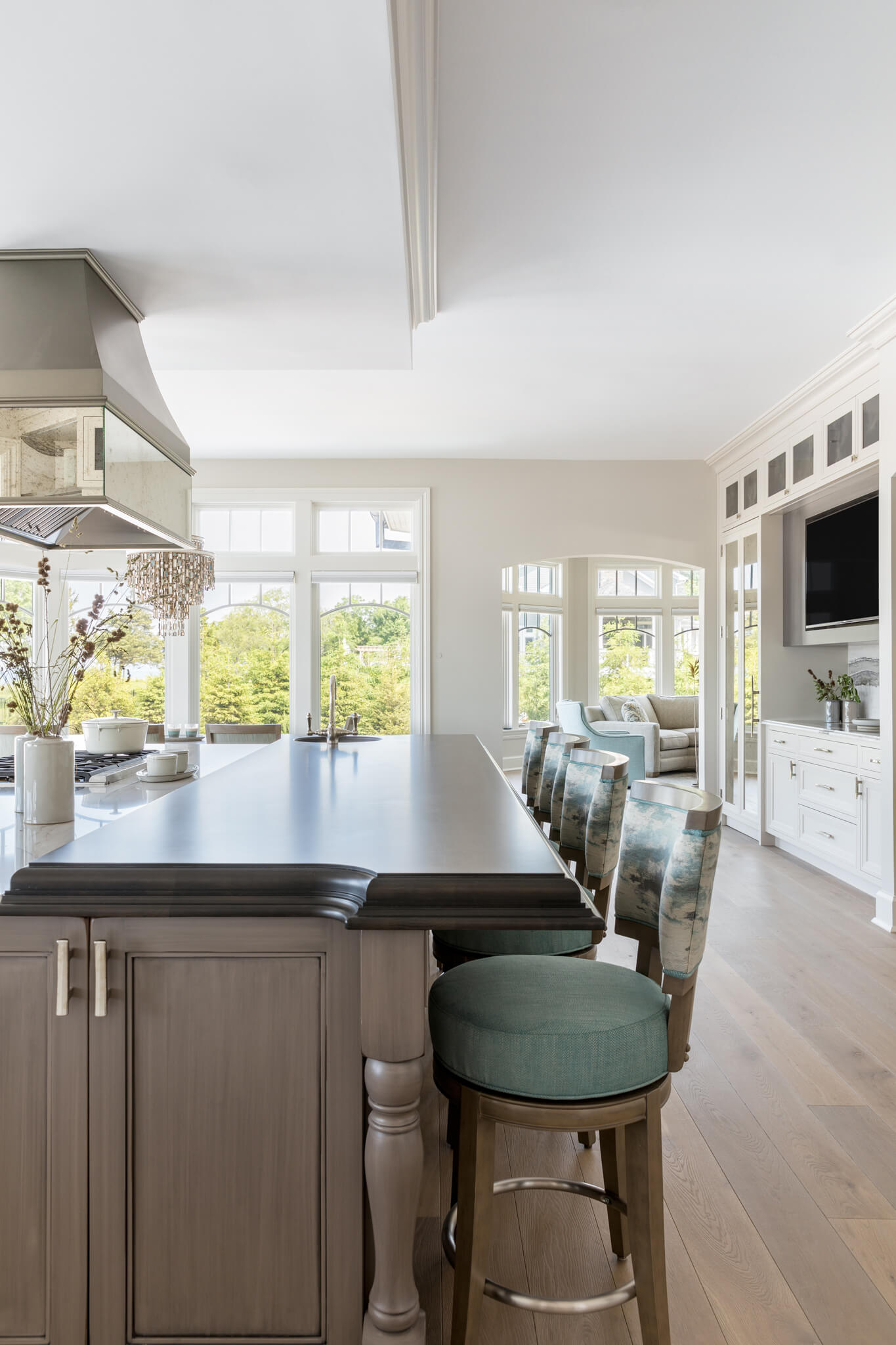
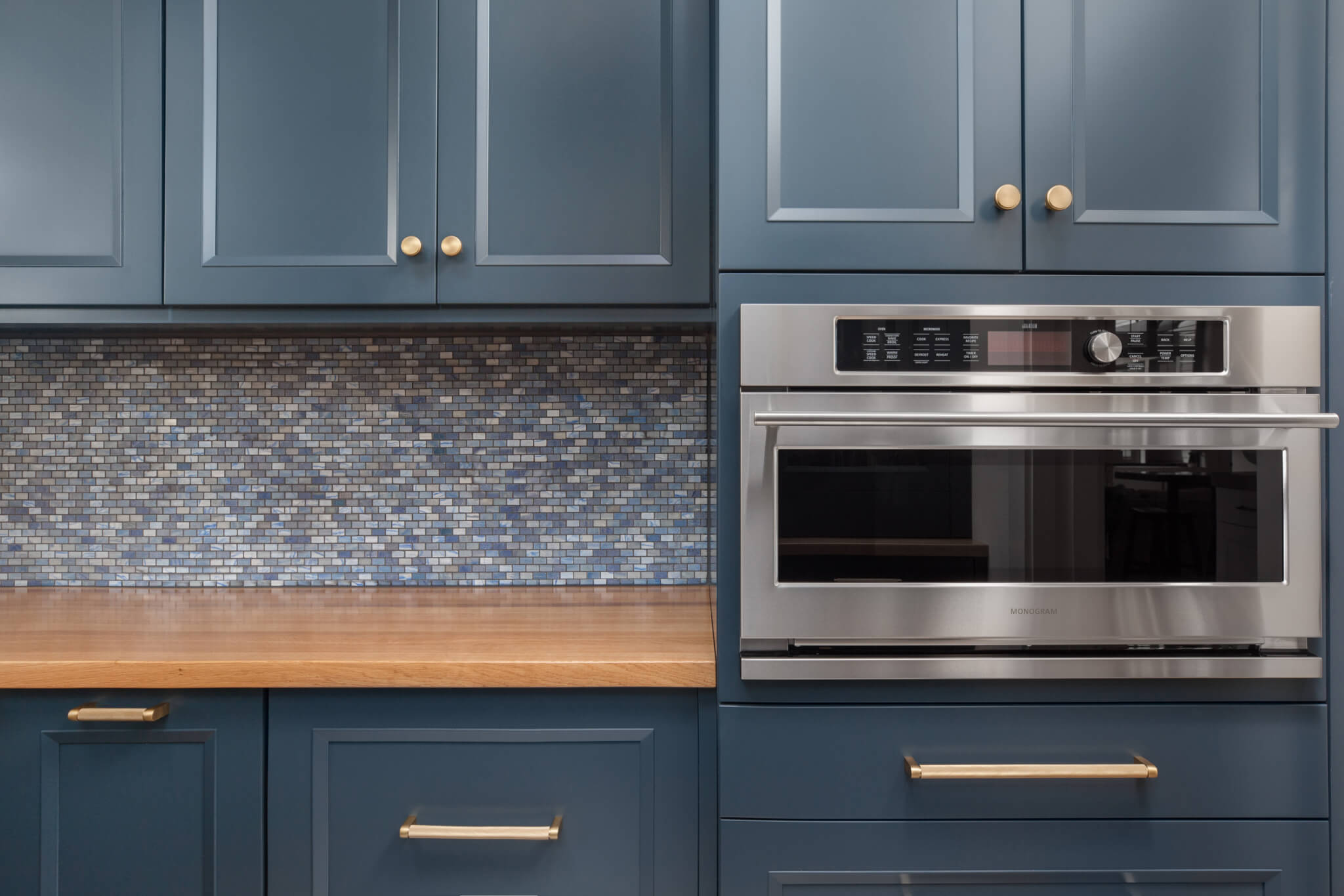
Durata® Matte finish on Curly Maple Kitchen Island, Design by El Design Studio
Performance Begins with the Right Finish
One of the most significant specification decisions is the finish itself. For projects requiring exceptional water resistance, many designers specify Durata®, our exclusive waterproof finish engineered to protect wood surfaces from water penetration while preserving the natural character of the wood. It’s become a popular choice for kitchen countertops, vanities, bars, bathrooms, hospitality environments, and other applications where long-term durability is essential.
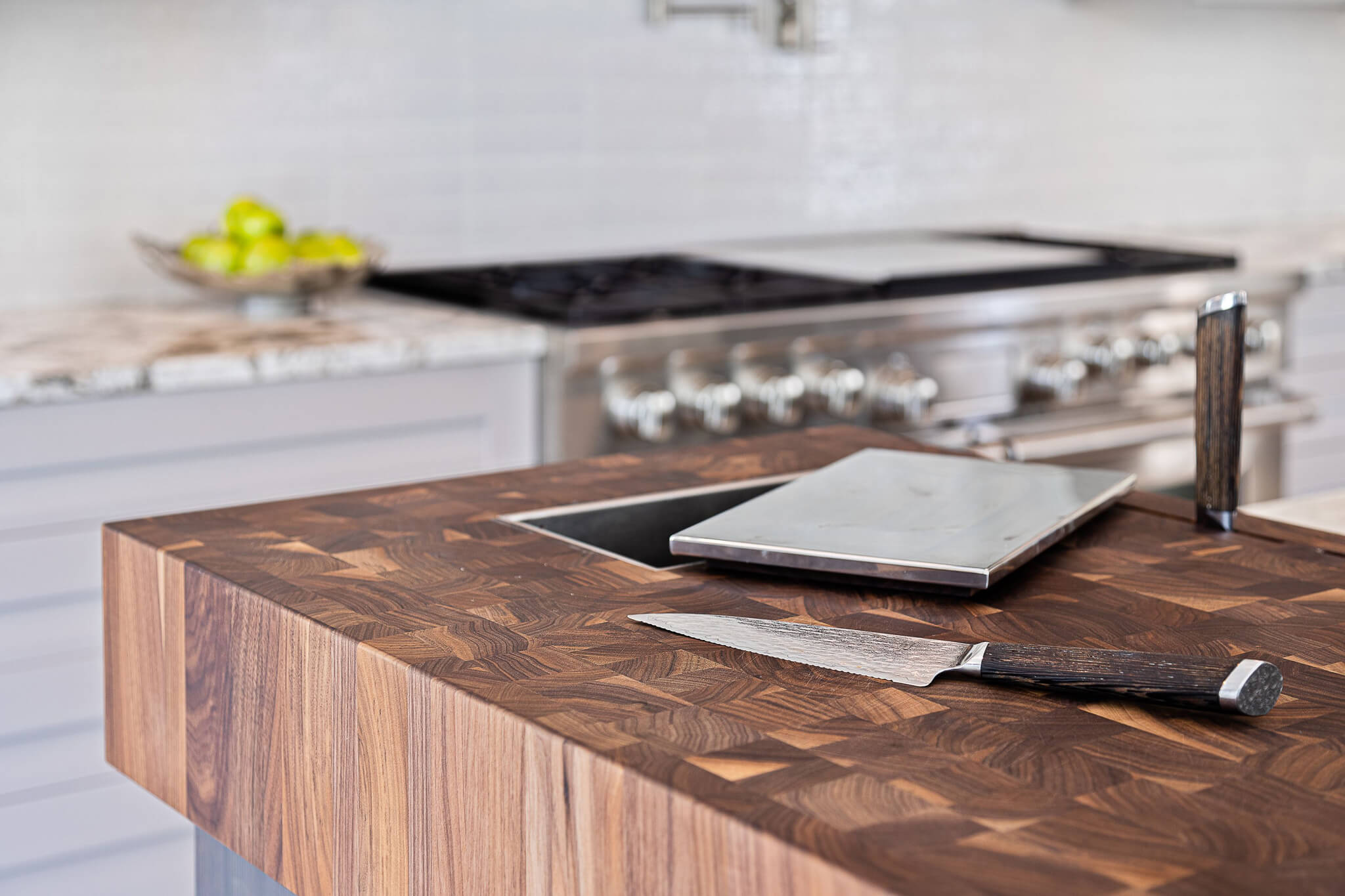
Other applications may benefit from a traditional oil finish that can be renewed over time, particularly on food preparation surfaces such as butcher block countertops.
Neither finish is universally “better.” The right finish simply depends on how the surface will live within the space.
Small Design Decisions Leave a Lasting Impression
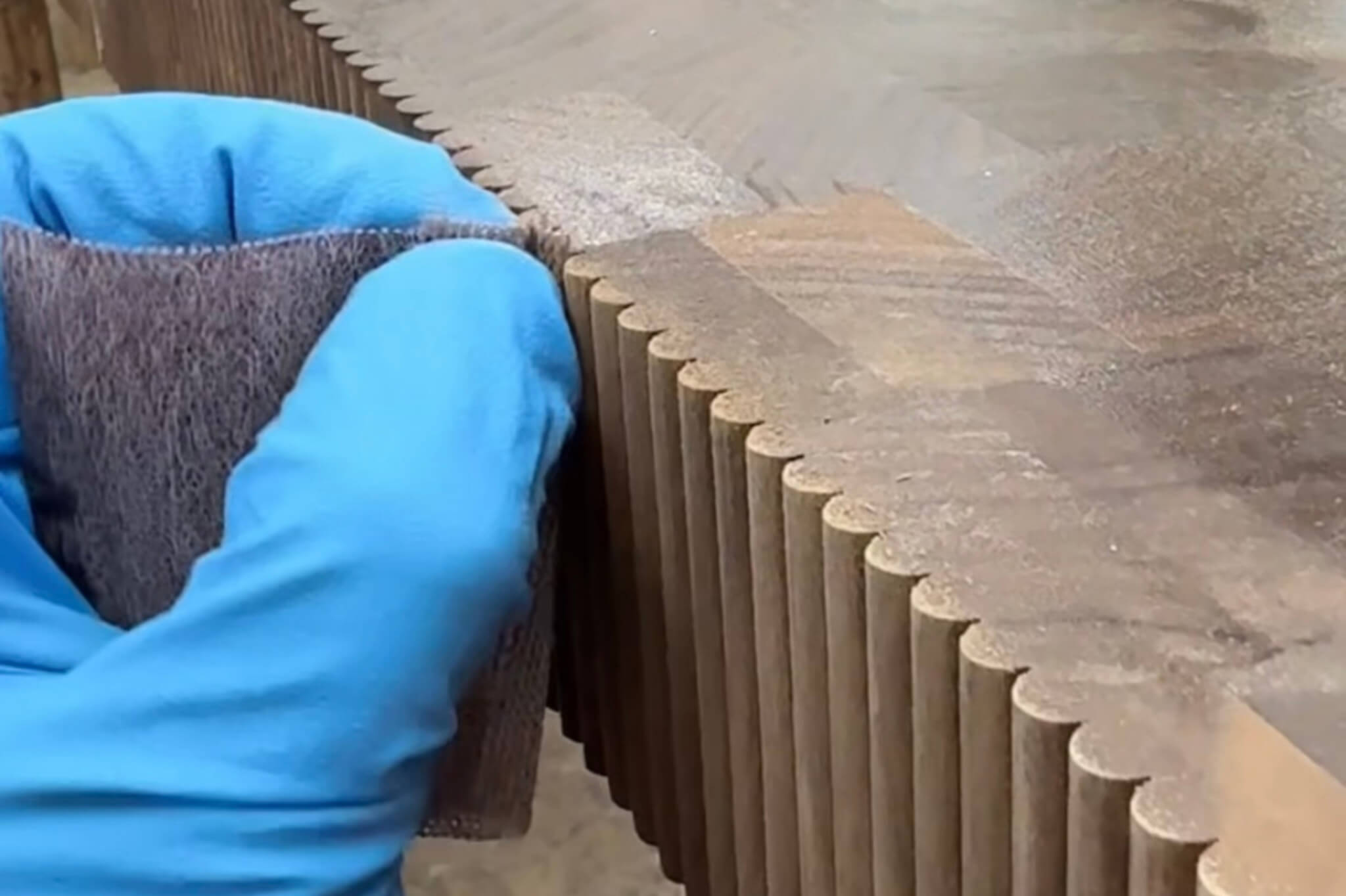
Edge profiles are another detail that quietly influences both appearance and function.
A crisp square edge creates a clean, contemporary aesthetic, while a more traditional profile, such as a Double Roman Ogee, can reinforce the architectural character of a classic home. Beyond style, edge profiles also affect how a surface feels in daily use, how light interacts with the wood, and how seamlessly the countertop complements surrounding cabinetry and millwork. These are the kinds of decisions that homeowners may never consciously notice, but they’ll experience every day.
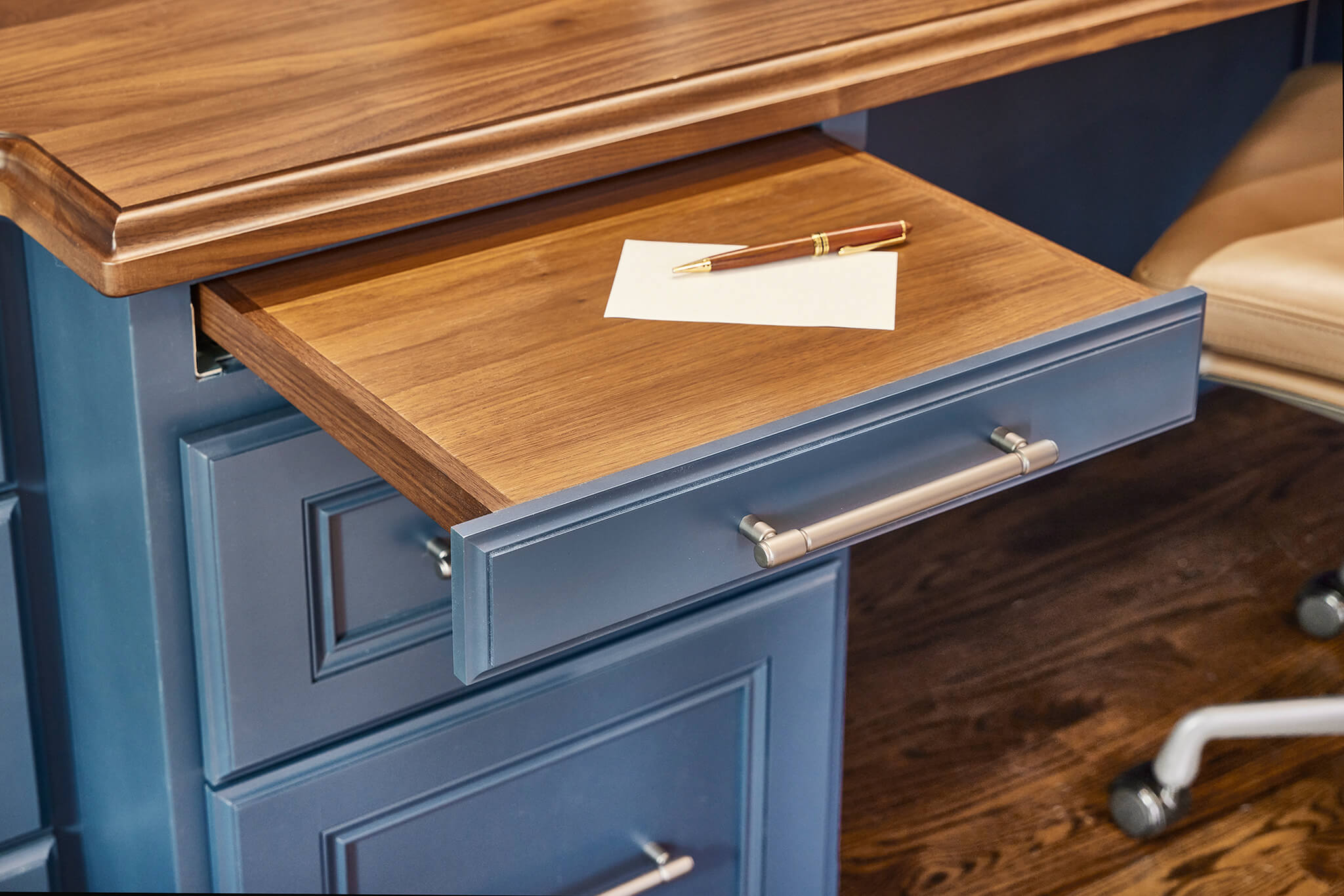
Standard Roman Ogee edge profile on Walnut desktop, Design by Kitchen, Bath, Home
Specification Is Part of the Design
At Grothouse, we are always eager to help with species selection, but oftentimes, our partners already know exactly what they want for a project. The discussion then shifts toward how the surface will perform, how it will integrate with appliances and cabinetry, what finish best suits the application, and which custom details will help preserve the original design intent for years to come. Every project presents a unique set of priorities, and our role is to help designers navigate those decisions with confidence.
The wood species may define the personality of a project. The details that surround it determine how beautifully that project performs over time.
Continue the Conversation
Selecting the right wood species is only the beginning. If you’re evaluating finishes, edge profiles, or performance considerations for an upcoming residential or commercial project, our team is always happy to help you explore the possibilities.