Exploring vertical edge treatments and a new approach to dimensional wood detailing.
After years of restrained profiles, we’re hearing a different request from designers: Can we do something more here?
Sometimes that means returning to more expressive traditional profiles. Other times, it means reconsidering the edge altogether. That question recently led the Grothouse team in a different direction, literally.
From Horizontal Profile to Vertical Detail
Most familiar countertop edge treatments are designed horizontally. Whether simple or highly detailed, the profile follows the perimeter of the surface. But the face of a substantial wood top presents another opportunity.
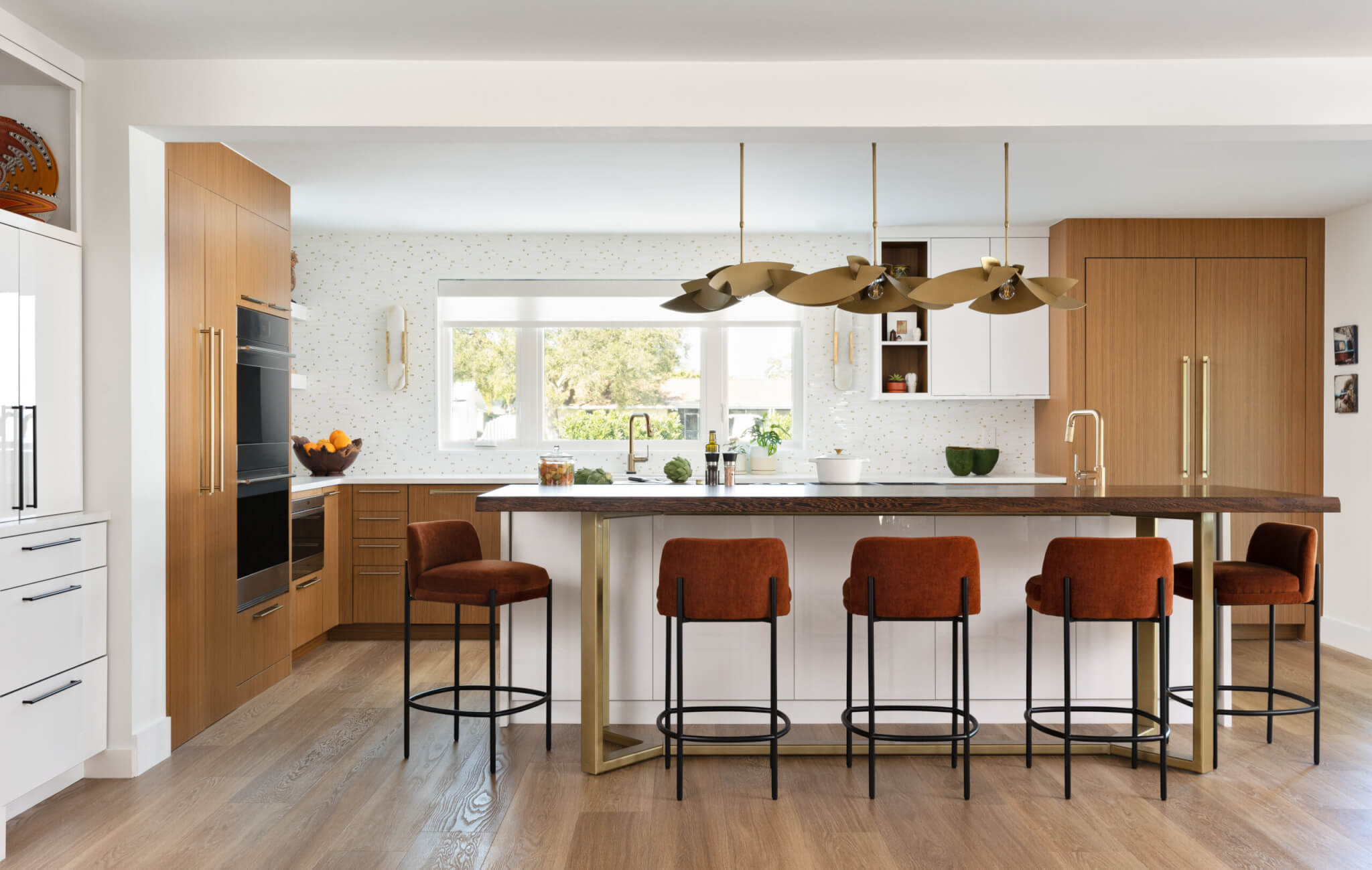
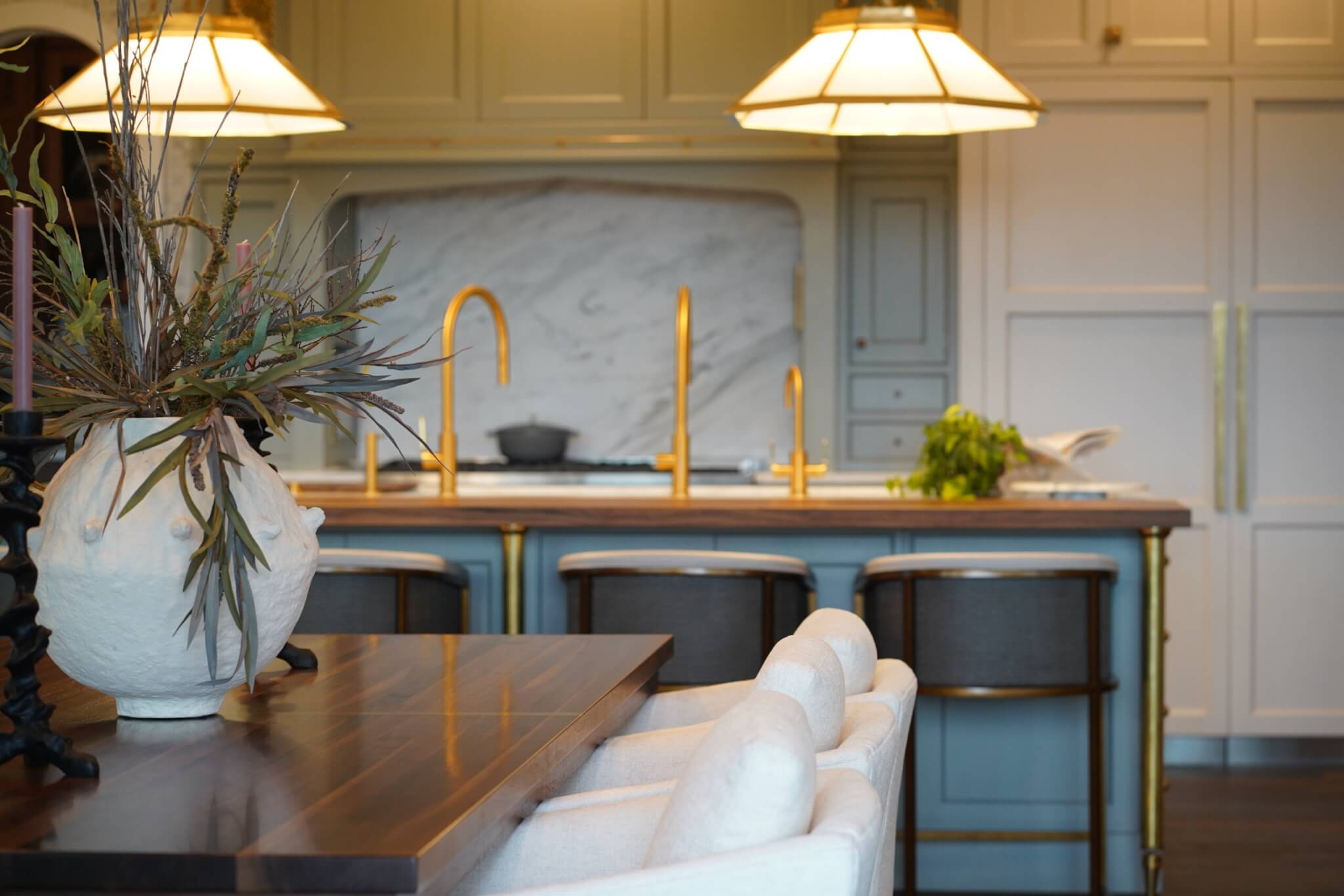
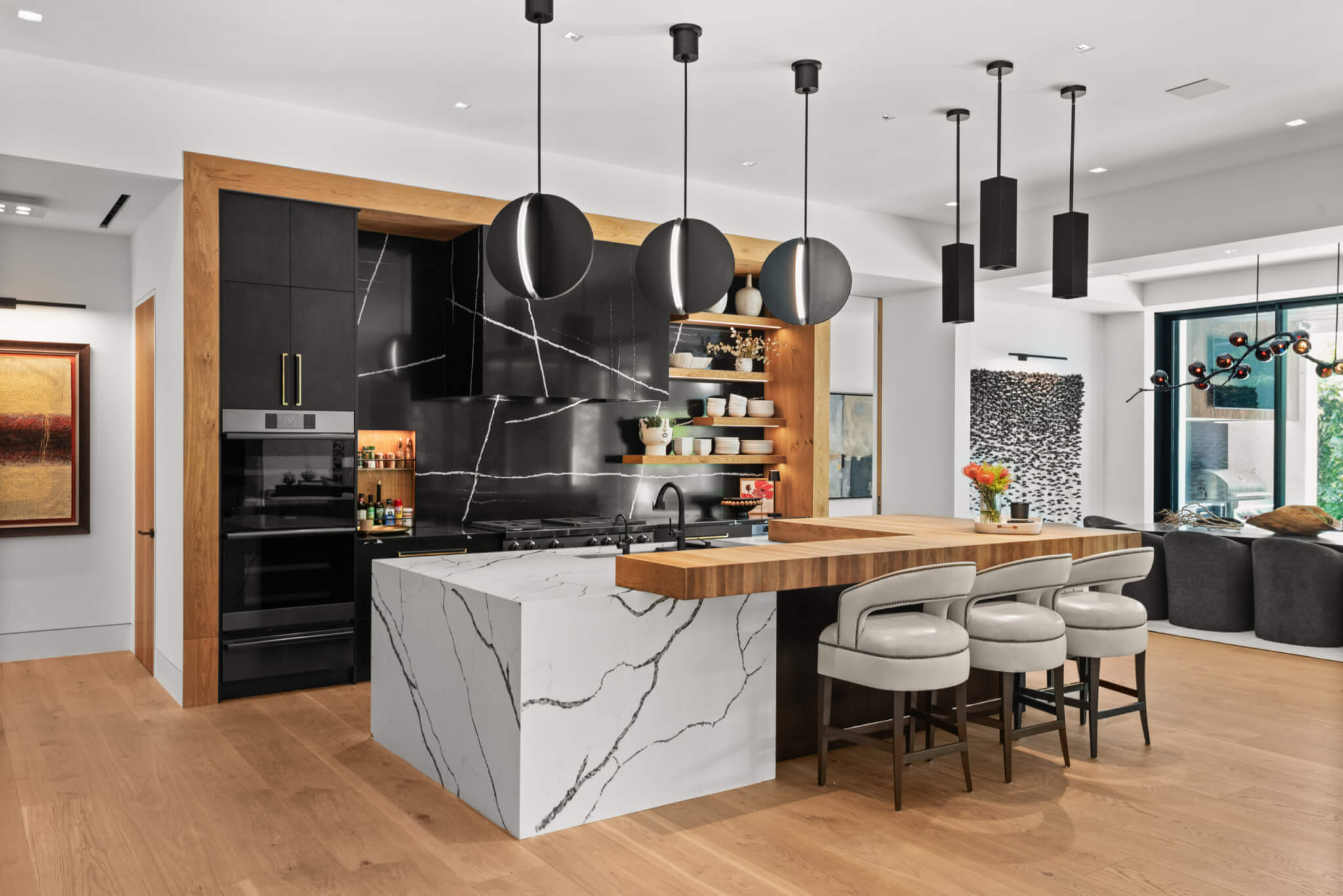
On an island, bar top or table, several inches of material may remain highly visible throughout a room. Rather than treating that plane as something that should disappear, vertical detailing allows it to contribute to the architecture of the surface.
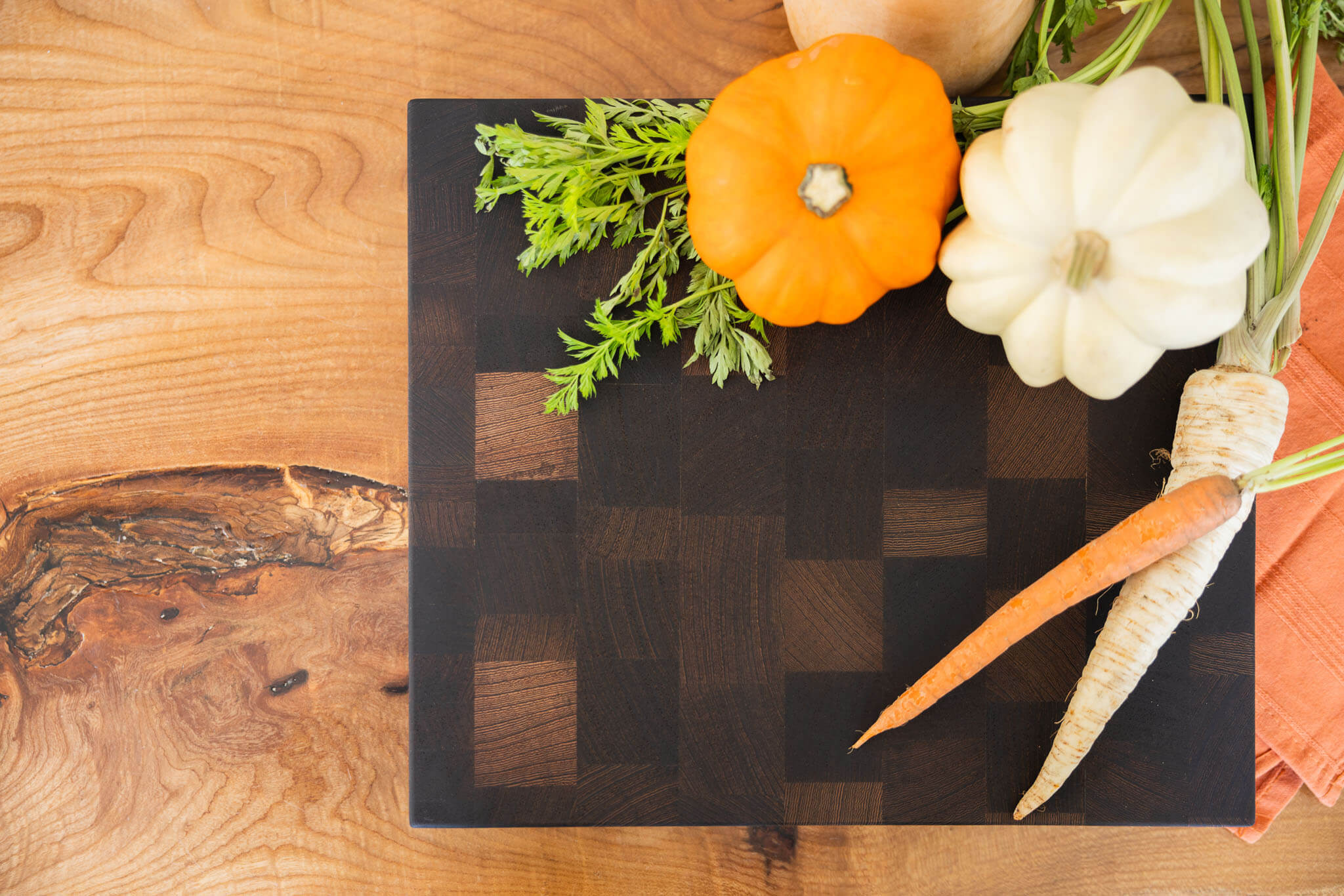
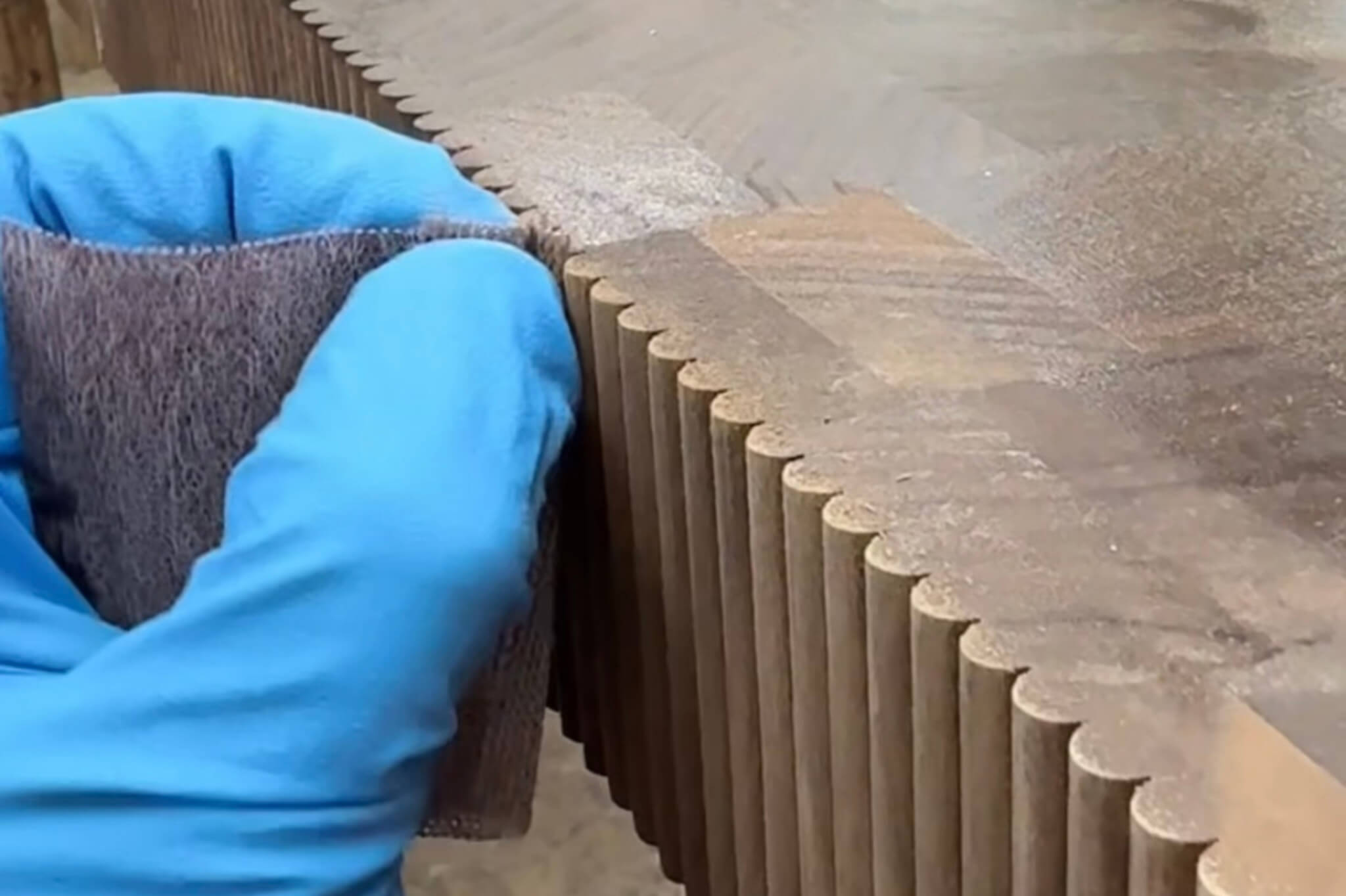
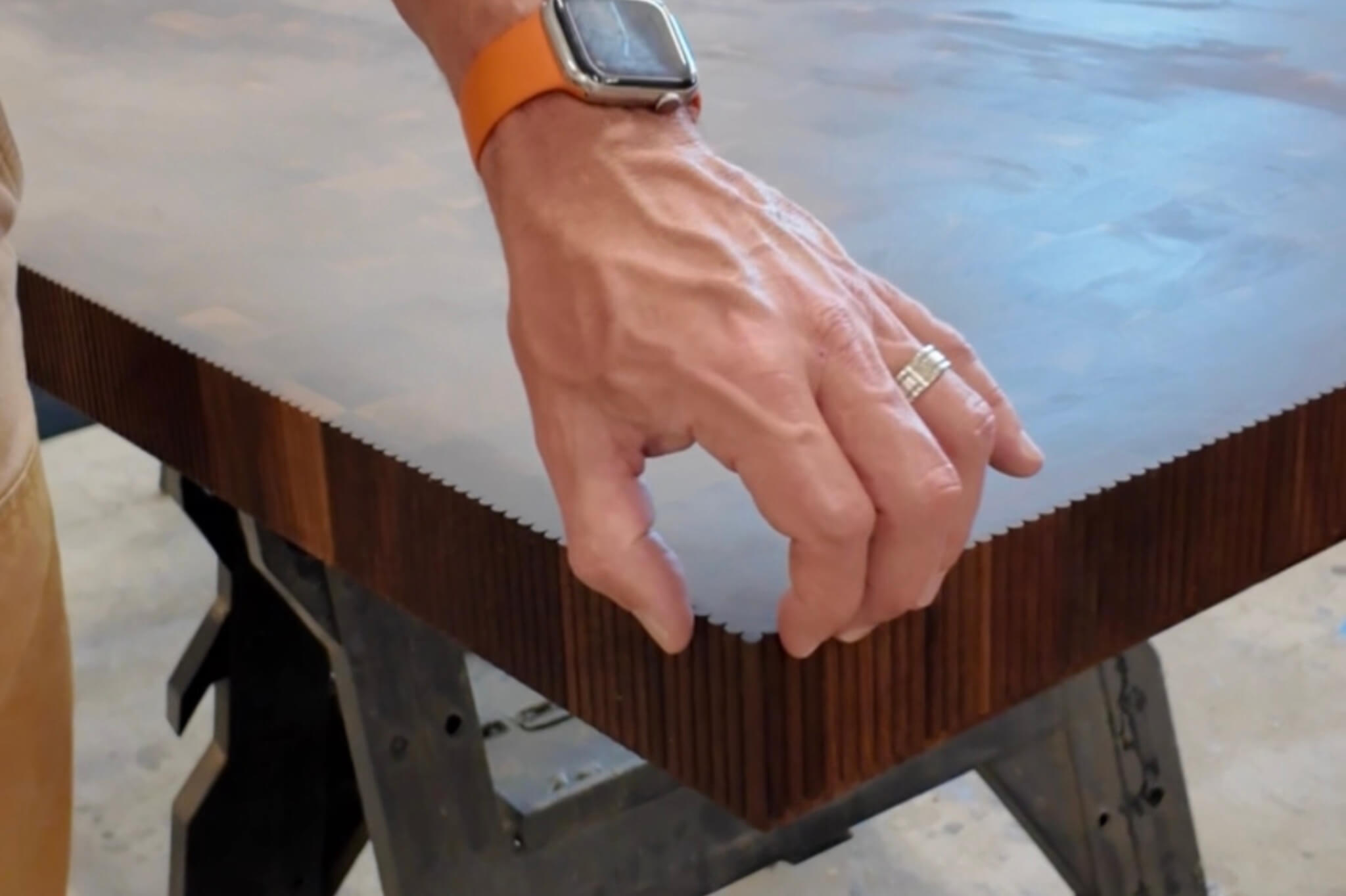
A recent Grothouse design explores that idea through a series of individual beads that travel vertically down the face of an End Grain Walnut top. The repetition creates rhythm and shadow around the perimeter. From a distance, the detail reads almost as texture. Up close, the individual beads and depth of the carving become much more apparent. Creating the idea was one thing; making it work around four corners was another.
Then Came the Corner
For the pattern to feel continuous, every run needed to arrive at the next corner with a complete bead. Not half a bead, not a narrow piece filling the remaining space, a full one.
“We needed to make sure that every single corner had a full bead,” Paul Grothouse explains. “That became the engineering challenge.”
That seemingly small requirement changed the way the entire treatment had to be approached. The beads couldn’t simply be applied at predetermined intervals after the dimensions of the surface were established. Their size and spacing had to be calculated in relation to the dimensions of the top so that the pattern would resolve correctly on every side. In other words, the decorative detail became part of the engineering of the surface itself.
When those calculations are right, however, the complexity largely disappears. The eye simply sees an uninterrupted pattern moving around the piece. That’s often the irony of a well-resolved custom detail: the more thought that happens behind it, the more effortless it can appear when finished.
Where Precision Ends and Handwork Begins
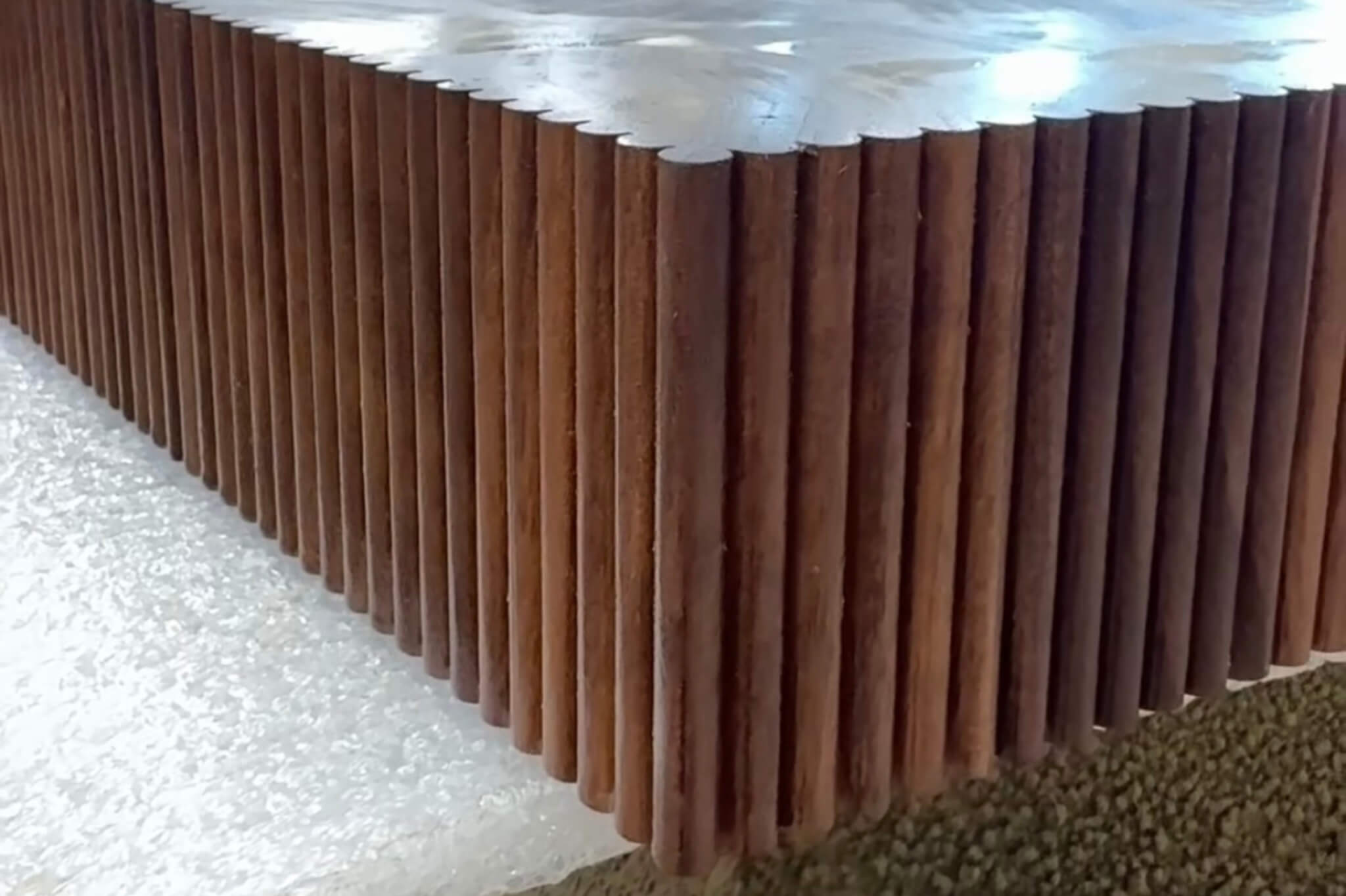
Engineering solves the geometry, but it doesn’t finish the edge. Once the vertical pattern is established, each individual bead introduces multiple surfaces that must be carefully sanded and finished while preserving its shape and definition. Repeated around the perimeter of a substantial top, that translates into considerable hand finishing in the workshop.
It’s also where two very different parts of custom fabrication meet. Digital tools, machining, and engineering allow the team to determine precisely how the pattern can work. Experienced hands determine how that pattern ultimately looks and feels. Neither replaces the other.
What Else Could the Edge Do?
The significance of this particular treatment isn’t simply the introduction of another edge option. It’s the design territory it opens. Vertical treatments allow the face of a wood surface to create texture, establish rhythm, introduce shadow or reference architectural detailing elsewhere in an interior. Different species, surface thicknesses, construction styles, and project dimensions can potentially lead to very different interpretations. And that raises a more interesting question for designers.
What if the edge didn’t have to be chosen from a list once the rest of the surface had already been designed? What if it were considered alongside species, construction, thickness, and form from the beginning? The answer may not always be more detail. A quiet edge can still be exactly what a project needs. But when the architecture calls for something more, the edge represents another surface available for exploration. Because when a surface is truly custom, even the edge can begin as a design question.
See How the Detail Was Developed
In this edition of Shop Talk, Paul Grothouse takes a closer look at the new vertical edge treatment, including the challenge of resolving the beads at each corner and the hand finishing required to bring the design to life.
Continue the Conversation
If you are specifying a custom wood countertop, island, table, or architectural surface, our team can help evaluate the material, edge profile, and manufacturing details while the design is still taking shape.
Discuss a Project With Grothouse
Explore the Grothouse Project Gallery
Design professionals interested in trade resources, quoting tools, samples, and ongoing project support can also explore the Grothouse Partner Program.